

Daring philanthropy’s end with Lankelly Chase
In trying to keep the balance of powers intact, the most unconventional ideas oddly flourish… sometimes adding wheels when you meant to upset the apple cart
By John Organ
It now feels like Lankelly chase was always out there waiting for me, on the baleful high mesas, on the plains of compromised visions and expedient normativity. I first met a form of Lankelly Chase around 2016 or 2017, when they came on the horizon in Manchester with something called the Elephant’s Trail.
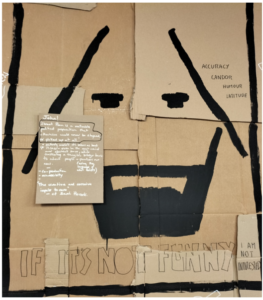
From that moment, they presented as something other than just funders – they helped create a space where decision‑makers and people with lived experience of multiple disadvantage could co‑produce work, and where we could restate the obvious in ways that weren’t really questions and which were too blank to be provocations, ways that usually go unspoken:
Why are there social problems when people don’t have enough money to live? That nagging none question, simple and solipsistic as it sounds, gnawed at everything we did.
From volunteers to co-producers and forging a community
Back then, I was involved in ICM (Inspiring Change Manchester) a lottery‑funded project tackling homelessness, addiction, criminal justice, and mental health.
It wasn’t a community in any neat sense, but over time, it solidified into something like one; tightened a little by the elephants project into a group of people exploring ideas together, sharing insights, even producing the occasional fortune‑cookie bit of wisdom that felt quasi‑mystical. I’m not sure how useful those bits of serendipity were, but they were certainly interesting.
What became possible because of Lankelly Chase was the creation of an environment receptive to a much bigger critique of philanthropy and charity in the UK. It spurred the observation that, generally in the system, ‘we could do absolutely anything with money or resources – no matter how weird – as long as we didn’t shift power and resources unconditionally’. That insight goaded us to try doing things that provoked and actualised exactly that shift. It set the stage for a broader conversation about who holds power and how we might redistribute it. I was surprised by how reluctant we were to assert a coherent vision for the future that everyone had the tools, and means, to include themselves in. After years of gathering people and ideas, you’d think a clear, shared goal might emerge, but it didn’t. Or at least not in a way that I understood and can usefully repeat now.
Talking with the funding group(s) sometimes felt like engaging with someone who wants to host a conversation but never quite commits to direction or content … like a thousand talk show hosts aspirant speaking to each other only on things they themselves have asked in the past
Critiquing philanthropy and beyond
Looking back, It might have been ‘brave & helpful’ just to have named opponents in the sector – like if BP named Greenpeace as its enemy. Instead, everyone seemed on the same side at a high level, yet at the micro level of programme funding they drew tiny circles around “not them” or “I don’t like that project.” We cooperate and compete all at once.
If we genuinely believed we had only twenty or thirty years to fix climate change, inequality, infrastructure, and democracy, we’d be far more focused now. Or we’d do exactly this – just determinedly not think about context and congruence of aims and method , keep a heads down-hope-for-the-best while take-what-you-can approach while maintaining the cleanest hands feasible.
When Lankelly Chase decided to dissolve its current structure, I understood the instinct as much as the logic – but it all made sense, and I’d argued for that direction. Still I wanted more: the ‘of course we’re not burning it down rather than hand it over’ understandings, detailed archives for power‑analysis, profiles, funding streams, internal politics. All that shared. Mapping how and where it was ‘resisted but happened’ will be tricky, risky even, but it would be fascinating – and will be needed.
As I continue, I’d like other resource holders to do exactly what Lankelly Chase did: create bold, daring spaces for critical resource and control redistribution. I’d question if a diminished charitable sector is better than none, but I’d welcome even more large‑scale statutory social interventions, like Scandinavian models, even though they haven’t flown electorally here. I’d like charity to return to basics: small scale, local, not dependent on huge fortunes. Like, ‘charity run to prop up the local park rounders team – fantastic, to prop up adult social care …er maybe not’. The current bidding processes and power structures they create – a weird meld of olympian narratives and mechavain lobbying – are hardly transparent, nor the best use for some actually fantastically gifted people (though, as ever, the wasteful misuse of amazing people and their energies is entirely the point in keeping the rum old game rolling along).
Philanthropy, as it stands, needs eradication. If we talk about UBI, yes to a minimum income, but with significant regulation around extraction from that income (like rent controls) caps elsewhere in the system to enable it – maybe £60k a year or £1.5 million lifetime. Otherwise, capital accumulation corrupts democracy and power. Effective Altruism’s idea that you can disrupt massively at one end and point in time then ‘fix it all later on with a splurge of insight laden generosity’, as if that dissolves the chaotic inequity at the other end which allowed it, simply doesn’t work. Though hats off to the brave, if somewhat asymmetric, impact of its creative argument.
What steps am I taking? With Lankelly Chase, some have said we “bullied” them into ethical consistency. Though if not ethical consistency, at least maybe a real look at how their means differ for their ends, and a push into something ‘provocatively different’ while there’s still notionaly time to make a difference. Would I do that again with another organisation? Absolutely. I’d challenge foundations like Paul Hamlyn Trust to eradicate poverty from their supply lines by paying a universal living income for six years – then watch the ripple effects on everything from community mental health funding to macroeconomics. I’d stage theatre productions, weird debates, art programmes, Deep Democracy courses, if asked. Or at least not explicitly told not to.
A redistribution and reparations blueprint
The best thing that could happen right now would be for resource holders to focus on redistribution while thinking and communicating deeply on what future reparations create: support Dark Matter Labs, UBI Lab, Our Agency… look at protective factors – economic protections, labour rights, land use rights. If they did that this Friday afternoon, I’d be thrilled, especially if it wasn’t my doing.
Really, the best outcome is to enable everyone to have access to everything, because when you can step out of the manufactured need and artificially induced want, people can thrive. It shouldn’t be so hard to live and exist. Why is it so hard just to kind of do alright? Bring back basic infrastructure; housing, water, communications, healthcare, bottle reuse – simple systems that worked without alarm… and massively complicated ones which supported us when needed. Let’s protect and rebuild these.
One final thought: always be curious. There are millions of ideas out there, better than the ones that get air in the rarefied thinktank spaces, and you never know which one might spark the next big change. And be confident:- you know what you want, and it was always yours anyway.
Story Weaving by Tchiyiwe Chihana
Learn more about Generative Journalism Alliance