
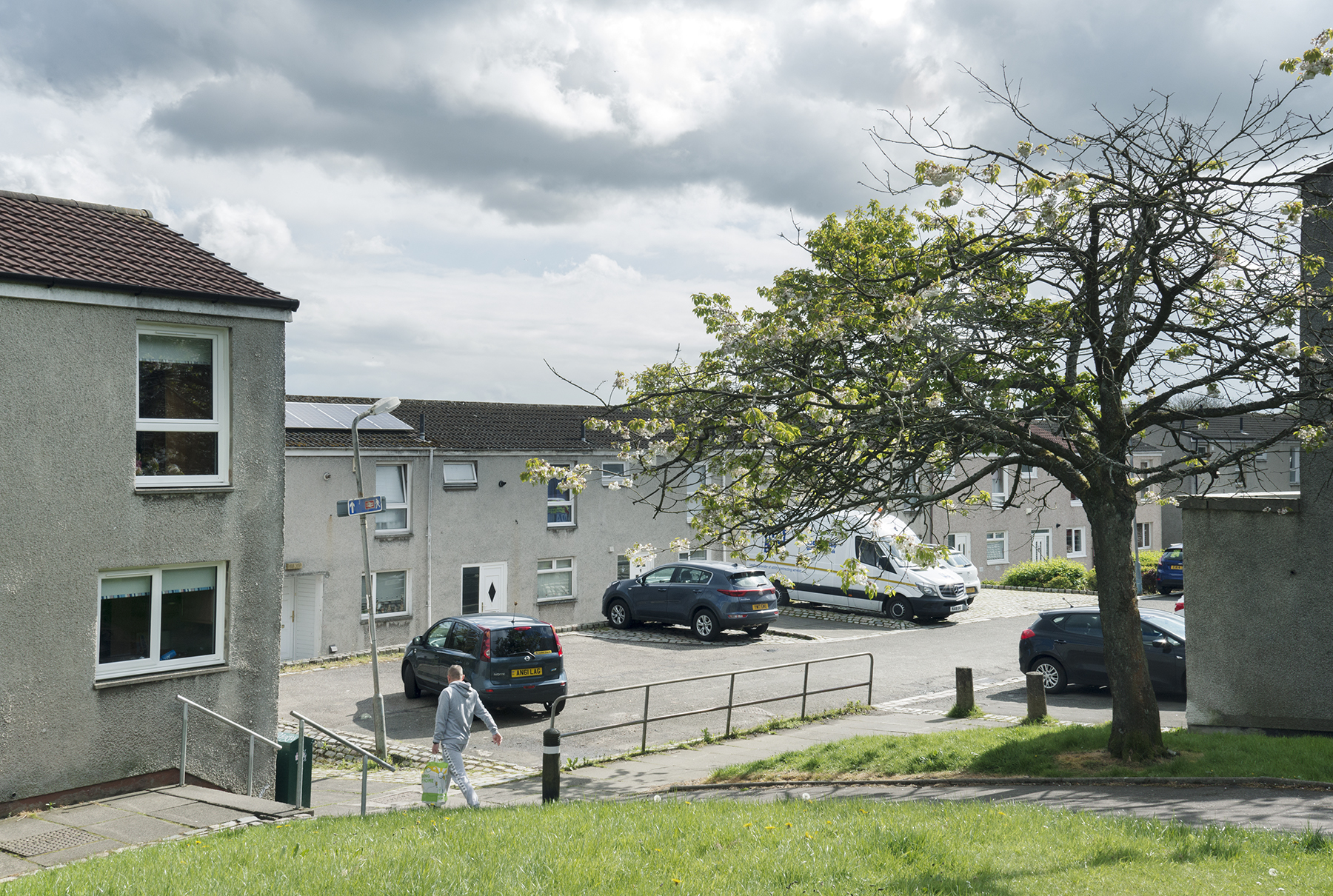
Lankelly Chase arrived with open hands, not a blueprint: Monica Needs
How open-handed partnership transformed Barking and Dagenham
By Tchiyiwe Chihana, Generative Journalism Alliance
Monica Needs, former Head of Participation and Engagement at Barking & Dagenham Council, says their partnership with Lankelly Chase changed everything.
“It never started with a grant,” Monica explains. “I first met Alice Evans from Lankelly through the London Funders network.” At the time, the council proactively commissioned a comprehensive report to chart a positive path forward for the borough, demonstrating its commitment to strengthening ties with residents and unlocking Barking & Dagenham’s full potential. Local data showed Barking & Dagenham among London’s most deprived boroughs.
“We’d co‑created a 2030 vision with communities, yet some community members still felt they lacked the agency to drive change. Recognising that was the turning point, Lankelly didn’t hand over a formal contract – they offered something more radical – a conversation.”
Monica mapped out the core challenges, and together with Lankelly she began engaging not just the council, but also grassroots groups and voluntary organisations. In parallel, Collaborate CIC brought together council and community partners to take a broader systems view to ensure that both big‑picture and neighbourhood‑level approaches advanced hand in hand. They co‑designed small pilot projects to shift power back to residents. Lankelly also collaborated with Kingsley Hall to complement and build on earlier participatory experiments carried out by Kingsley Hall Church and Community Centre.
Backing people, not paperwork
“It was informal – but powerful. Julian even met our council leader to agree with the approach: shift power, recognise our roles, build capacity.” Before long, Barking & Dagenham became one of Lankelly’s place‑based investments, not because of paperwork, but because of trust built over a shared commitment to do things differently.
“Lankelly didn’t just fund ideas,” Monica says. “They backed people – and that’s what made the difference.”
She remained involved through Disruptive Explorers and the community‑driven projects she helped co‑design with her team, while Lankelly continued to challenge and provoke all partners to think differently. “Avril and I would both attend conferences when we initially brought everyone together,” Monica recalls, “and it was very much a shared journey—relationships evolving over time, driven by collective inquiry and constructive provocation.
There’s a weaving together of various elements that continued for a while until Barking and Dagenham became one of the place-based partnerships. It was never intended for the council alone to hold that relationship; that was always the plan. When Avril McIntyre stepped in as an associate for Lankelly, she became the key link, and Monica moved into a bridging role. “I remained actively engaged through Disruptive Explorers and its funded and proposed projects, co‑designing each initiative with the community while our team continued to cultivate those relationships and conversations.”
Rather than immediately awarding a formal grant, Lankelly began by cultivating relationships with voluntary organisations, residents and uncommonly – with the local authority itself. “We were the outlier, but everyone shared a passion for real change. I’m not sure they even knew what they wanted to do at first,” she admits. “They came in with a place‑based, relational mindset and explored the borough’s underlying dynamics – uneven power and unheard voices – and allowed relationships to develop organically over time. It wasn’t a project, it was funding people to journey together, to wrestle with what equity really looks like on the ground.”
Power shared, not prescribed
Lankelly Chase’s first move was to give power away. “I’d walk into meetings and feel they weren’t there to boss anyone around. They were obsessed with not holding power in the wrong way.” There was a fierce commitment to equity. Monica recalls Lankelly constantly probing their own positionality – and the community’s, asking, “how do we build real fairness on the ground?” They didn’t hand us a rulebook. They’d say, ‘Let’s co‑create the parameters.”
Embedding such a fluid approach within a large municipal organisation presented some challenges. As a complex institution, the council could have resisted; nevertheless, Lankelly consistently tested our boundaries and invested directly in people. They funded my training in Deep Democracy without hesitation, an extent of support no other funder would have provided. Their unwavering belief, “we recognise your potential and are prepared to invest in you” proved transformative. Monica explains, “I was the person who could open the doors in the first instance. My job was to introduce them to others and then let those relationships, and that power, rest with local people.” Over the years, staff teams shifted, but Monica’s 21‑year tenure in Barking gave her a depth of local understanding. “I’d built trust here. That privilege meant I could hold certain connections securely, even as teams changed.”
“From day one, I always knew my role: open the door, then step aside. That’s how real power sharing begins.”
Monica explains that Lankelly’s investment in Collaborate wasn’t merely financial. Those moments were more than projects, they were conversations that surfaced hidden issues and forged genuine partnerships. “That’s where real change happens: when you open the door, step through it together – and keep discovering what comes next.” They funded the learning partner for BD Collective, an invaluable contribution that complemented further support from the council and other bodies. “All those relationships influence how I operate in local government,” she observes. She has become exacting about language: “I twitch if someone says, ‘We’re creating outcomes for people.’ I always correct them – ‘We do it with people, not for them.’” This insistence on reciprocity reflects Lankelly’s ethos: “They weren’t advocating transactional power; they sought a journey that loops back to explore the soil we’re trying to nurture.”
Funders sitting alongside statutory bodies to inhabit messy spaces
On the learnings that can be taken from the Lankelly experience for the wider philanthropic field, Monica admits that it was almost accidental. “Lankelly stumbled into Barking & Dagenham by chance – and that worked for us. I’m just not convinced it would land so neatly everywhere else.” She notes that every place Lankelly engaged is a deprived community, yet the entry points vary. “They didn’t follow a rigid formula. It makes you wonder: how do they really select places? There’s a learning there for philanthropy at large.” For Monica, working inside a local authority sharpened that insight.
“Some funders won’t engage with councils, but if you’re serious about systems change, you need to sit alongside statutory bodies – and find the people willing to inhabit that messy space with you.”
Networks helped. “London Funders gave us a table alongside trusts and foundations. That forum means challenges get aired and solutions co‑created.” Ultimately, it came down to trust. “If you invest in a place, you have to trust its people to steer the journey. You can’t predetermine every project. What counts is the hidden learning, the personal transformations that unfurl over time.”
She points to colleagues she first met through Lankelly’s programmes – many still in Barking & Dagenham, still striving for change.
“That’s the real return on investment. Agents of change rooted in their communities for the long haul. Maybe the wider philanthropic world could learn from that. It takes courage to back people before you know exactly where they’ll take you. But that’s how you grow something genuinely rooted, not just another boxed‑off pilot.”
“I loved the journey,” she reflects. “Working with Lankelly widened my network and gave me the space to explore new ideas.” Over five or six years, those expanding relationships became a “gateway to a wider world,” she adds, one whose impact still resonates across the borough. “I felt quietly proud that we stayed the course together.” That long‑term commitment supported BD Giving – a community endowment the council seeded itself, and other layer upon layer of social infrastructure.
“All of those initiatives grew from that shared journey,” she concludes. “For me, the value wasn’t just in projects delivered, but in people transformed and places made stronger for the long haul.”
Editorial support by Generative Journalism Alliance