
The dual role of grant giving organisations
Trying to square the circle of ethical and responsible investing
By Catherine Howarth
It would be great if foundations continue to play a dual role of funding organisations that are challenging the worst excesses of capitalism, and as capitalists and owners of companies using their own shareholder voice to demand better and higher standards of responsible business conduct.
The role of an organisation like us, independent in this space, holding accountable and making transparent what the largest investors in the world are getting up to, is really critical at this time. It inevitably relies on philanthropy.
Taking on the big corporations
ShareAction has been a grantee of Lankelly Chase for about 15 years. They gave us unrestricted grants, so they committed to the core of our work. We’ve grown significantly in the years that they’ve been funding us but they’ve always been there sustaining the work we do…
Lankelly Chase has been both a grant giver to us and a member of something we established called the Charities Responsible Investment Network, which allows endowed foundations to be part of a learning and action community to use their assets and voice in a way that drives positive change in the wider investment sector and corporate world.
It’s been interesting, because Lankelly’s relationship with money and the investments they’ve got brought them into contact with us, and they’ve been a key actor in some of the shareholder activist campaigns that we’ve run, taking on banks and major companies in the retail sector.
Lankelly Chase have been fantastic in encouraging us to be our best and bravest self as an organisation, to live up to our values. They pushed us to be more courageous.
It’s not easy, when you’re grant funded, to go way ahead of your own funders. So it’s great when you’ve got a funder that’s genuinely ambitious. A lot of funders are ambitious on other stuff, but when it comes to their own investments it turns out they’re more cautious.
Balancing funder-grantor power dynamics
The foundation world is a funny space where everyone is polite to people with money. That’s just the way it works.
Because part of our job is working with foundations to help them use their assets in more activist ways, we’ve had a privileged position relative to some of the dynamics that take place in the foundation landscape.
Knowledge is power, and we have a lot of knowledge about what goes on in the investment industry. Because foundations are not just giving money away, they’re also investing money, that’s knowledge they value. So we’ve been able to engage with the foundation community in a way that’s a little different from many grantees, because we have knowledge and relationships directly relevant to the golden goose, which produces the golden eggs – the investment fund, the endowments.
But it’s been an uncomfortable journey too because we are also sitting on the other side. We do depend on foundations for financial support. We’ve never taken money from the corporate community or the commercial investment industry. So whilst we have a better balanced power dynamic, we’re still cautious about challenging foundations.
I know that’s something Lankelly Chase has grappled with. They’ve been very conscious of those power dynamics and wanting to change them. My understanding is that they want to operate differently, partly because they want to escape the constraints of those power dynamics.
Squaring the circle
Lankelly have struggled with the implications of their endowment, and I think that struggle was a big part of the decision to close the foundation. In the end, I think they just couldn’t square the circle with their own investments.
My understanding is that a lot of the reason they’ve made this decision is that they didn’t want to just tick along inside the capitalist system anymore. But the capitalist system isn’t going to collapse just because they close their doors. So I think we need to continue to do what we do to hold investment power accountable.
What we want to see – and we’ve always wanted to see – is money used ethically and responsibly.
We want to see the foundation sector at the forefront of demanding responsible practice from business and then using the earnings from the businesses they invest in to support systems change, including in capitalism itself.
We want to address power differentials here in the UK and across the world – that’s the problem, fundamentally. Everything else is a symptom of that.
My personal view of the world is that extreme inequality is just an expression of extreme inequality of power. I think everything else good that we need would flow from fixing that inequality of power – more ecological outcomes, justice for workers, so much else would flow from that.
That’s why I’ve devoted my professional life to this space, because I think it gets very close to the centre of what really matters.
Getting organised
The answer is to get organised – for powerless people to get organised, including inside financial markets.
This means…
Strong research on investors and companies, so that everything is grounded in fact and credible evidence.
Relationship building, to build networks of like-minded players that can build power to drive real change in the investment system.
Capacity building, giving people the skills to be effective in change-making, especially inside the investment industry.
Narrative work, to create stories and understanding and help people see the world the way we see it, rather than in the narratives created by big corporates and big money and the elites. We need better storytelling of where we’ve had success, so that it builds hope.
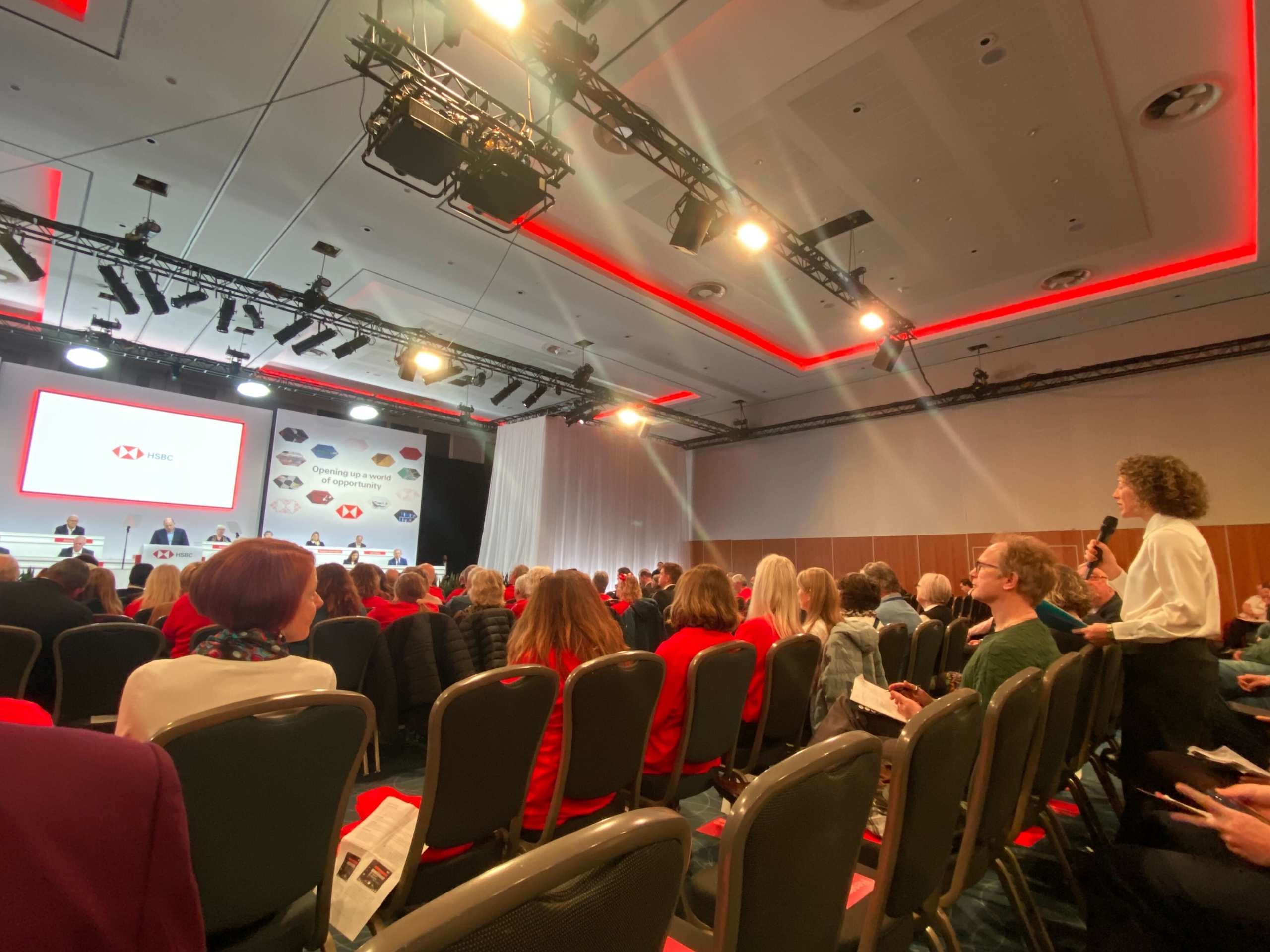
And then activism: actually buying shares in companies, turning up at the annual general meetings, bringing people that are affected by companies’ activities into those spaces so their voices can be heard, bringing the power of major investors in those companies together with people who are affected by what happens, so that you have unlikely coalitions of support for change.
Those are all the things that we’re trying to do.
Story Weaving by Jack Becher
Learn more about Generative Journalism Alliance