
When we started work on severe and multiple disadvantage, we framed this based on intersecting ‘needs’ like homelessness, offending, and drug and alcohol use.
When we commissioned research into the scale of these intersections, it became immediately apparent that the dominant profile of people affected was white men.
The frame we had come up with was issue/needs led; we started with the problems and then worked out who the people were, rather than starting with people and working out what they needed. If we had set out with a different question; ‘who is most likely to face harm and be disadvantaged in the UK?’ then the work would have been about community resilience, community empowerment, enfranchisement and anti-discriminatory measures. Starting with needs meant it was about support services.
We recognised this was problematic, but rather than backing out of the cul-de-sac and having another go at framing, we did correctives – bringing more ‘domains’ like mental ill health and experience of violence and abuse into our research. We did additional work on young people and women, and around race. However, none of this work really felt like part of the central endeavour of the organisation.
This made it impossible for us to be an anti-racist organisation without going through some kind of reckoning. We needed to interrupt the course of our own history and correct what had come before. This did happen, to an extent (see this section on that process).
We surfaced white supremacy in the organisation and were explicit about it. We tried to educate ourselves, and particularly white colleagues. This did translate into shifts in mindsets and behaviour. Different communities started to be prioritised, and increasingly so as we went along. Understandings of knowledge generation – who is considered to be an expert – changed. Understandings of who would make a good trustee changed too.
Two years on from a real crisis point within our organisation in 2018/19, there was observable change. The profile of our networks of grantees, board and advisors had all changed. We also asked ourselves; where does our money come from? How do we continue to earn it? (You can’t be an ‘anti racist foundation’ if your money is continually generated by a capitalist system which exploits the global south).
We committed ourselves to be in the continual practice of anti-racism, as it is a practice, not a state to be reached. This is possible as a foundation.
However, the particular pitfalls of philanthropy – the power inequality, the accumulation of wealth, the allocating of money to people against certain pre-determined criteria – all increase the odds of racism creeping in. All these things are designed to create hierarchies and to separate people. The charity system is borne out of the dynamics of benevolence and othering. It denies and depoliticises the structural history that created the need it is trying to address in the first place.
There is a need for deep, fundamental power redistribution. In Lankelly’s case, we tried to do the same thing better, but we didn’t necessarily fundamentally change the thing that we were doing.
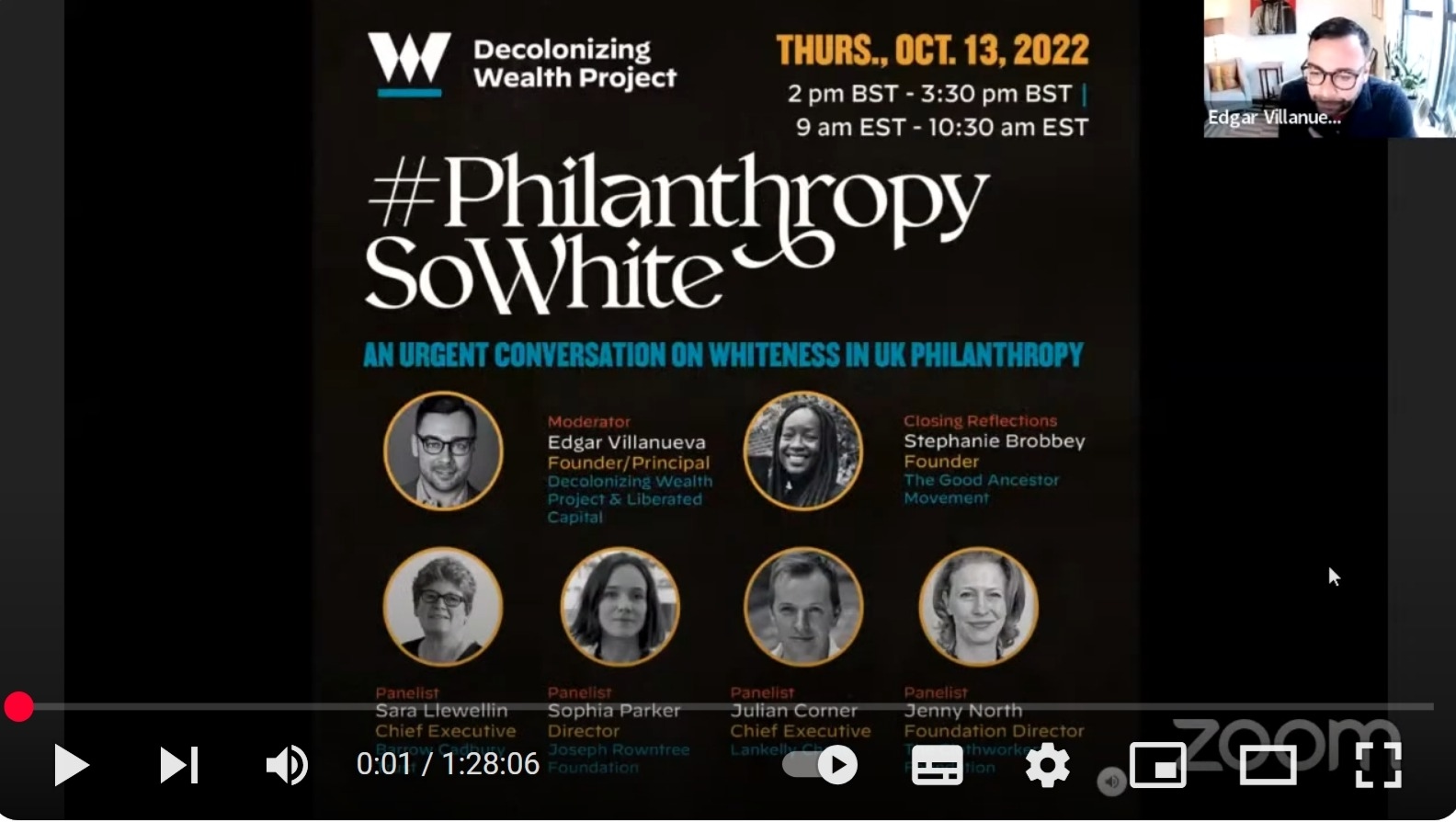
Julian Corner, Lankelly’s CEO, speaking as part of a panel discussion hosted by the Decolonizing Wealth Project in 2022.