
Lankelly resourced organisations working on Black mental health. We also supported Black women’s organisations working on issues of violence against women and girls.
Our change of strategy to focus on systems change and severe and multiple disadvantage meant these programmes came to an end. Our framing of these issues meant work focusing on racial justice was largely excluded from our new portfolio of grantees. The ‘Promoting Change Network’ of organisations we funded around 2011-12 included only one group with an explicit focus on racism and racial justice.
We did recognise how deeply problematic that was and took some action to try to redress the balance. We weren’t using the language of action inquiry at the time, but we began a process of learning and convening around the issue of racism in mental health systems, trying to identify points of systemic intervention. Our advisory group for this included academics, clinicians and people with direct experience of mental health systems. The advisory group was shared with Social Finance, who were also developing work on this theme through their ‘Impact Incubator’ process.
We supported the early stages of what became Black Thrive in Lambeth through this work and commissioned a new knowledge hub on racism and mental health, the Synergi Collaborative Centre. At the time, this was the largest grant we had ever made. We were also a founder member of a funder network on race and philanthropy – Funders for Race Equality.
“This work is core to Lankelly Chase’s focus on severe and multiple disadvantage. Whilst our Hard Edges report focused on street homelessness, contact with the criminal justice system (as an offender) and being in substance misuse services, we’re keen to keep testing and challenging a fixed definition. Ethnic inequality in mental illness is about life experiences, the cumulative impact of episodes of discrimination, the way structural inequality exposes certain people to greater risk of poverty, the behaviour of systems…it’s all there. At the same time, our collective gaze seems often to be averted. This is why we’ve decided to make such a substantial investment.”
We clearly recognised that Lankelly couldn’t legitimately focus on extreme disadvantage in the UK without giving weight to considerations of racial justice, but we didn’t pause to question whether we had the expertise and sensitivity to do the work.
We can’t claim any credit at all for the successes of this work, but Black Thrive in particular has gone on to be hugely impactful.
The partnership between the University of Oxford, the University of Manchester and Words of Colour that was the Synergi Collaborative Centre came to an end in 2022 but a second phase, also funded by Lankelly, followed on. This was hosted by NSUN (the National Survivor User Network) and focused on connecting activists and organisers as a network and shifting power and resource to grassroots groups.
The funder collaborative we helped to start has developed and become an entity in its own right.
Though money was moved to some important work, in retrospect our role and stance was clumsy at best.
We were caught up in our own heads, trying to solve problems we had created for ourselves. Our own intellectual journey was the thing driving us.
We were also aware of how Lankelly looked. This meant there was an element of performativity – we wanted to be seen to be doing the right thing. We didn’t pause to consider that our approach and positionality might actually be problematic and cause harm. We lacked the awareness to make Lankelly’s resource’s available in the most helpful and least harmful way in the fields we were wading into. We weren’t even aware that we lacked this awareness.
At that point, we had done none of the work inside the organisation to expose and start to address whiteness and white supremacy thinking.
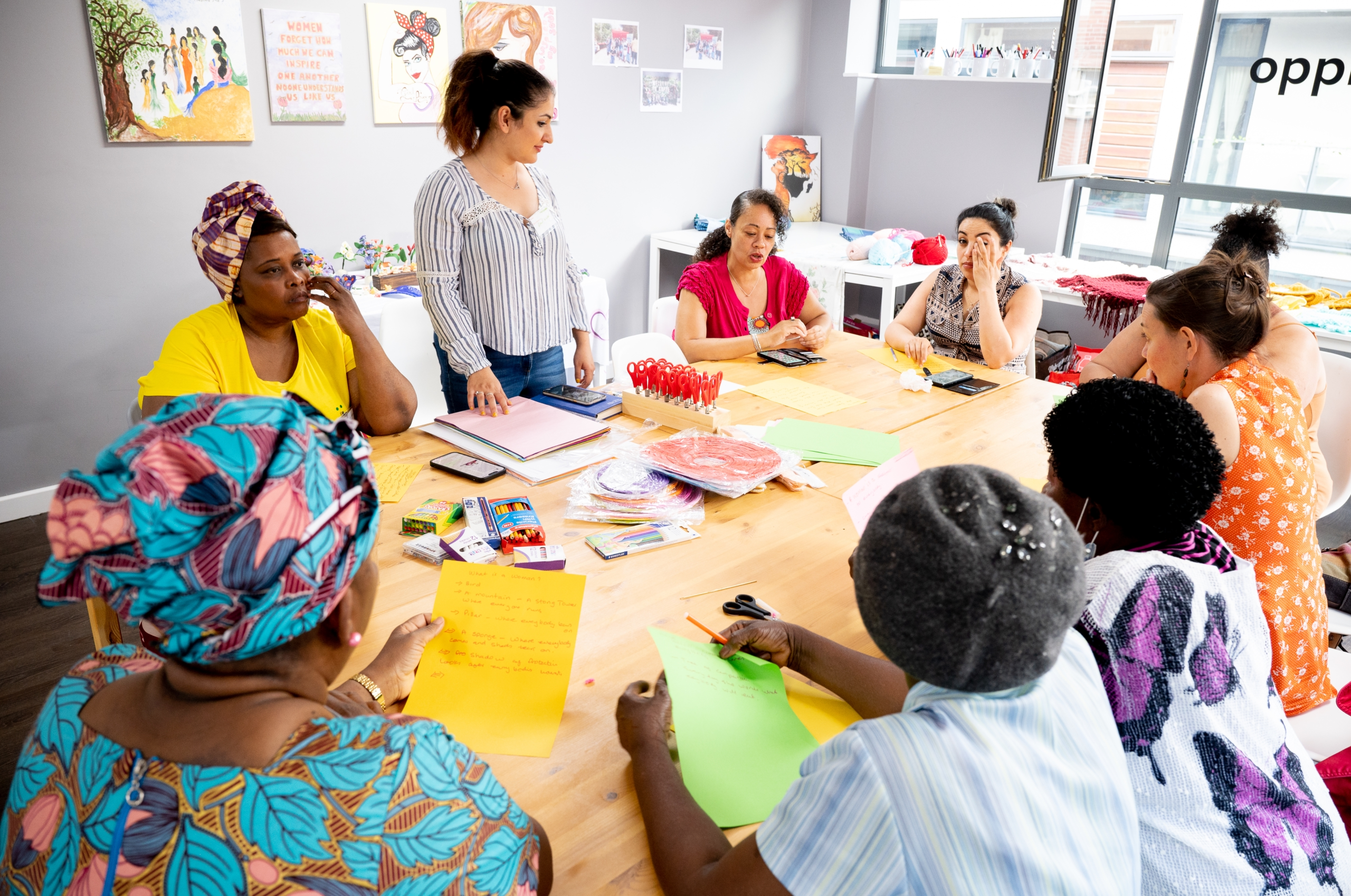
Our greater awareness and integrity came from a different place in the organisation – from women of colour who felt Lankelly Chase could do much better.
Resources



Other related stories
-
Lankelly empowered many people to challenge the status quo
That battle goes on—but now we’ve lost a valued advocate and vital resources too.
Sohan Sahota, BAC-IN Read more -
We need radically different futures
We cannot rely on our public institutions.
Malik Gul, Wandsworth Community Empowerment Network Read more -
Foundations are setting about good work and hard change but still lack self-accountability
Language out of pace with structures on the ground.
Yasmeen Akhtar Read more