

By 2018 we knew the issues we were working on were complex and interconnected. Conventional ways of deciding what to do, and then what to do next, weren’t applicable.
The contexts we were working in were continuously changing in unexpected and unpredictable ways – sometimes as a result of our interventions, and often entirely outside of our influence or control. Rather than using outcomes or targets set in advance, we used learning as a tool to help us navigate this uncertain terrain. We took action, we learned from that action and decided what action to take next. This model is called action inquiry.
We adopted this approach as a whole organisation, for external and some internal work (e.g. on governance). Programme Officers became Action Inquiry Managers and we all saw our job as exploring areas of concern, trying things out and adapting our approach based on what happened.
We worked with ‘learning partners’ rather than evaluators, to help us (and grantees) hold structured processes of learning and adaptation.
Our CEO Julian Corner talks about action inquiry at Lankelly [NOTE – placeholder video]
When we had funded organisations in the space of severe and multiple disadvantage, we had seen practitioners working with people as a process of inquiry or discovery.
They were walking alongside people facing challenges, but coming from the position of, ‘I don’t know you. I don’t presume to be able to tell you how to live your life. I don’t know what motivates you, only you know that’.
This was different to the norm because so much practice in the field viewed people as units of risk to be managed, rather than as vibrant, unique human beings.
At the same time, we were increasingly aware that in the work of social change, things are so interconnected that you’re always discovering fresh angles and fresh dimensions that haven’t been revealed before.
Things are always changing, and your own awareness of your position and role is changing too.
It does not make sense to take a ‘diagnosis and prescription’ approach.
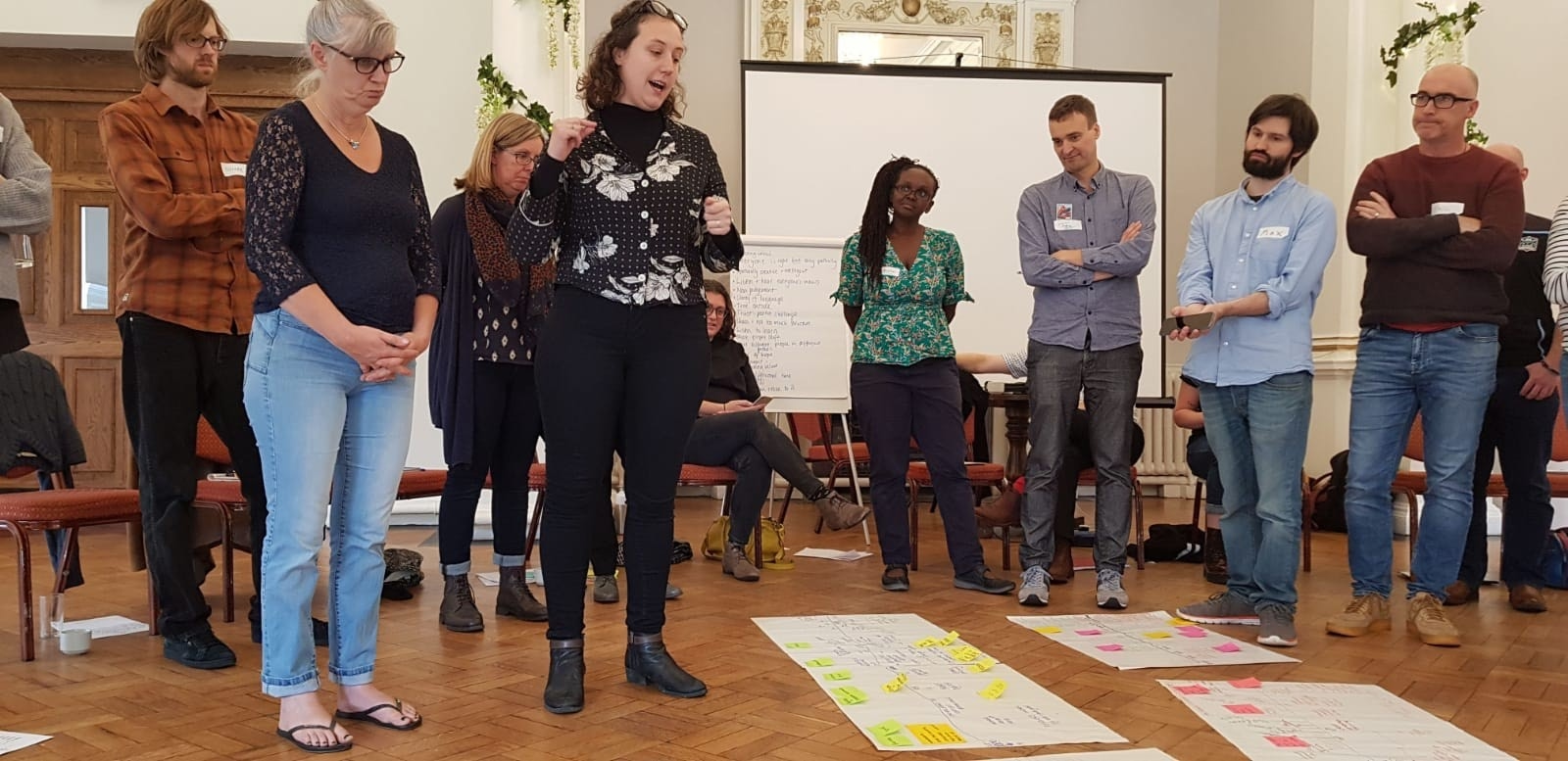
We started to view all our work as a process of discovery. We didn’t think about grant-making as just making a decision, resourcing an organisation and moving on.
We wanted to be in relationship with grantees so what we learned could contribute to our action inquiries. This was the foundation of our relational approach to grant-making.
Coming into relationship with grantees in a spirit of learning helped to mitigate power dynamics, as there was a sense of a reciprocity; though it was also the case that some people found this disorientating and confusing: ‘what is it that you actually want?!’
We resourced organisations to have their own space and time to learn and adapt. Sometimes this included funding learning partners to support these processes. Some organisations deeply valued this.
The spirit of inquiry meant we never let things rest. We always questioned why, and always went deeper, even when this was difficult.
In the end, this led to the 2022 decision to close the foundation and use its power and assets in a different way.
There was a restlessness to the organisation that meant we were continually moving onto the next thing.
Sometimes we had moved on (in our own thinking) from work we had funded before it had concluded. We never pulled funding – that would have been unforgiveable – but people were hurt when we were obviously less interested in their work than we had been previously.
We never quite worked out how to hold a good central learning process which drew data together from across the different action inquiries to work out ‘so what’ and ‘so then what’. We circled in intellectual analysis over and over.
Team members were able to follow their noses to the extent that the organisation became quite fragmented. There wasn’t necessarily a central shared sense of what was important (in fact, there were quite different world views within the organisation) and what our key points of learning were.
Lankelly team members were passionate about their areas of work, and had often come into the organisation from a particular field, bringing a clear sense of what needed to happen and a network of valued relationships with them. Action inquiry requires a certain degree of emotional detachment – an ability to change course and let things go at times. These two mindsets didn’t always sit well together.
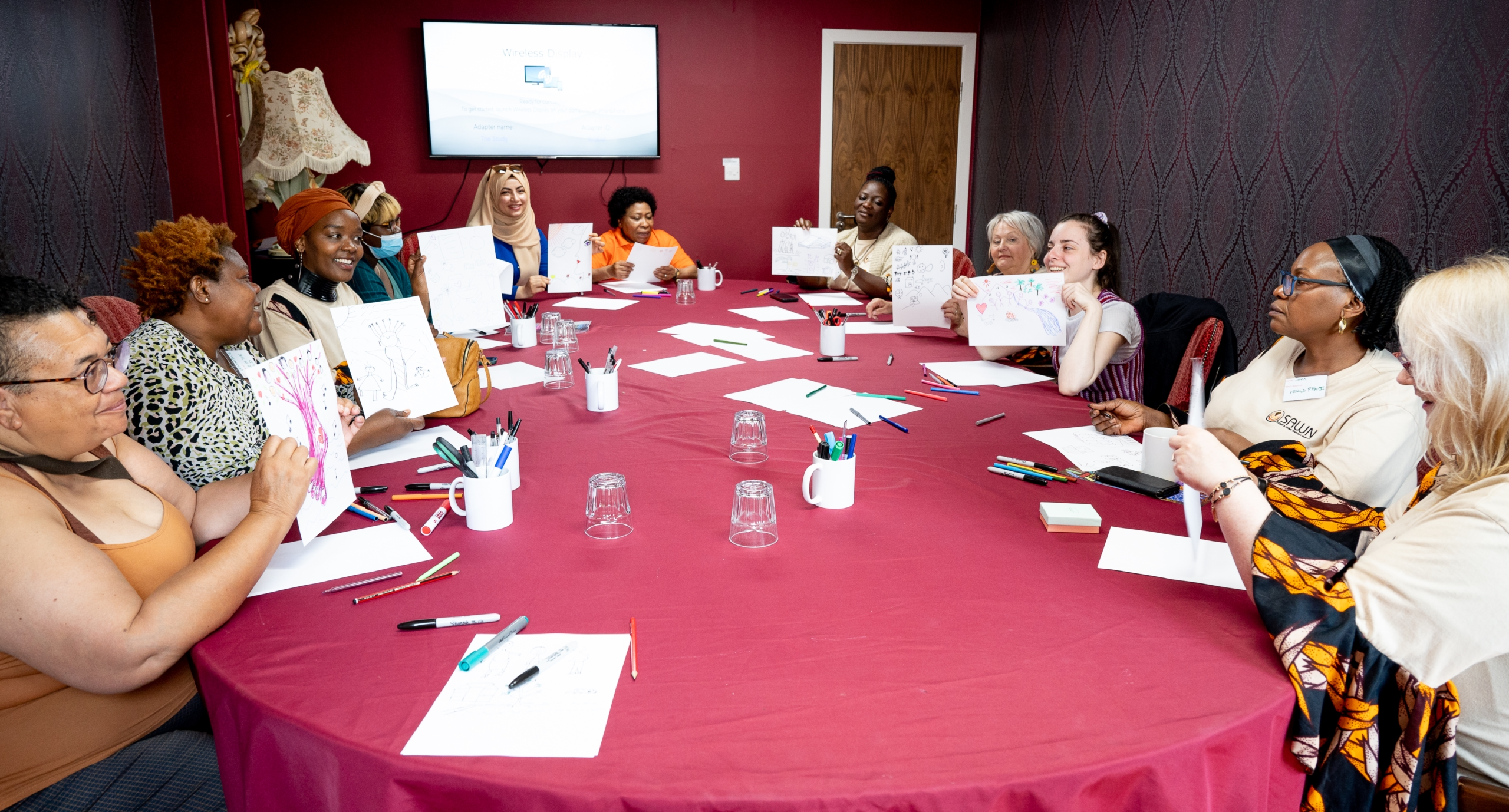
Professor Toby Lowe and Max French from Northumbria University supported our place-based work, especially in its earlier phases.
Rivers Coaching supported the place work in its later stages until the foundation stepped out of a direct role in that work. (So from about 2022 to 2024).
Orit Gal worked with our ‘How’ action inquiry team, which asked ‘how will the infrastructure/architecture be in a world healed by justice, equity and inclusion?’ (this quickly morphed into ‘Nurturing Alternative Realities’).
Nusrat Faizullah supported our power action inquiry.
Yasmeen Akhtar of Inchange was the learning partner to the board from 2022 to 2025.


Related stories
-
Becoming learning partners
Lankelly showed that funding for learning was a possibility, but held their truths too lightly.
Toby Lowe, Manchester… Read more -
Learning through inquiries
How a ‘spirit of inquiry’ can transform grant giving – and the structures needed to enable ‘live learning’ along the way.
… Read more -
Lankelly taught me learning is an outcome
Promote a spirit of inquiry in grant making trusts.
Ollie Batchelor Read more