
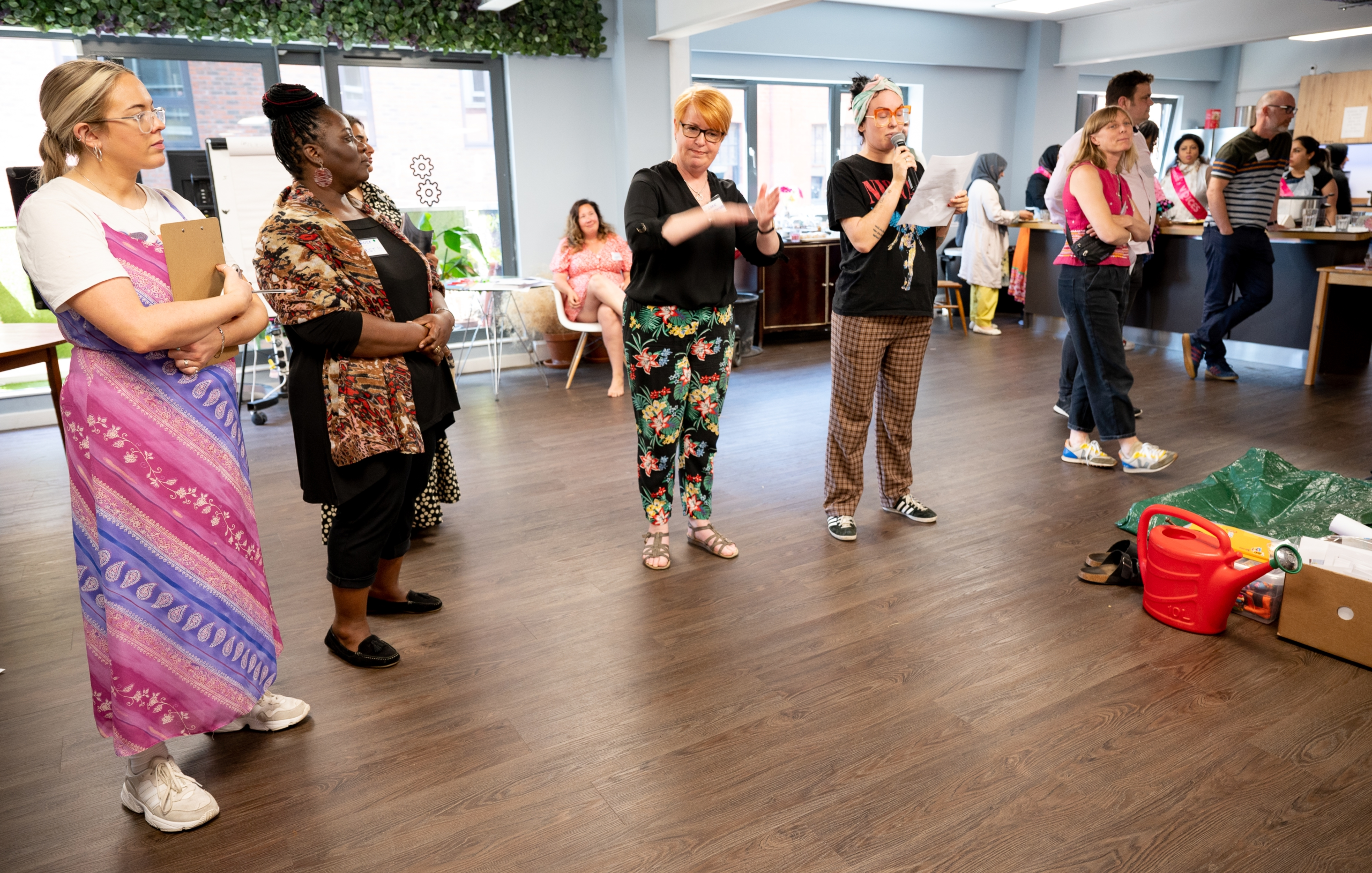
As our awareness of power and complexity developed, we realised we needed to pay attention to our practice as a team, and as individuals.
As we became a more relational and involved funder, we were concerned about inadvertently putting pressure on applicants or grantees to say and do what they thought we wanted. We did not want to suggest we knew the solutions, because we felt strongly that these needed to come from people closest to the issues. As a result, we needed to become skilled in having conversations in non-directive and power-aware ways.
Our commitment to systems change meant we needed new tools and practices to be able to ‘see the system’ and to understand ourselves as part of the systems we wanted to influence. This included our personal ‘rackety patterns’ – the mindsets, beliefs and behaviours we were stuck in.
As decision making over funding was devolved from trustees to the team, we needed ways to make decisions that enabled all voices to be heard.
As we became increasingly embedded in the networks we were funding, it was necessary for us to understand our own power and to be able to ‘see’ ourselves. There was a huge onus on the the practice of the individual – all of us were deeply involved in networks, places, movements and communities of practice. We had to navigate that positionality, aware that we would almost inevitably be steered towards further funding by the partners we were working with.
We worked with a facilitator from the Tavistock Centre who provided a regular space for reflective practice as a team.
In developing our systemic awareness we used multiple approaches, including ORSC Systems Coaching.
As a whole team, we trained in the Lewis Method of Deep Democracy. We practised this as our main methodology for team discussions, including when making funding decisions, for several years. Several team members also found Art of Hosting useful.
We almost developed a ‘core curriculum’ for all Lankelly colleagues; but we stopped short of this because of questions about who should decide, and whether it was right to impose this on the whole team.
Over time, people diversified the practices they wanted to be trained in and there was more of a fragmentation of approaches and methodologies. This wasn’t necessarily a bad thing. However, in true conflict-avoidant style, we never openly resolved whether Lankelly was a pluralistic organisation – containing many views on how change happens and the practices that support it – or whether we should have a central and shared commitment to one theory of change, with shared practices.

We built reflexivity and questioning into the work. This went deep into the organisational culture.
Though we weren’t all comfortable with ‘bringing our whole selves to work’, shared moments happened and things that were not previously visible were made visible. This included the work of parenting and other forms of caring. For colleagues who wanted to bring in what was going on in their lives, the space was there. They felt heard, witnessed and supported.
As an organisation, we didn’t properly onboard people. We weren’t clear during recruitment, for example, that taking part in these practices was part of the organisation’s expectation. People felt that they had to say yes, but they were not invested and didn’t always see the value. This led to resistance and fatigue.
Though the need for some practices had come out of our awareness of problematic power dynamics, we continued to exercise power in clumsy ways. For example, we ‘invited’ all grantees to do the Deep Democracy training we’d undertaken ourselves. Although some people may have found this useful, most felt that they didn’t have much choice but to take part.
Even at our best, the challenge of personal positionality within a foundation – honouring others’ positions, experiences and wisdom without paternalism or ‘power-over’ – was an ongoing issue we never fully resolved.
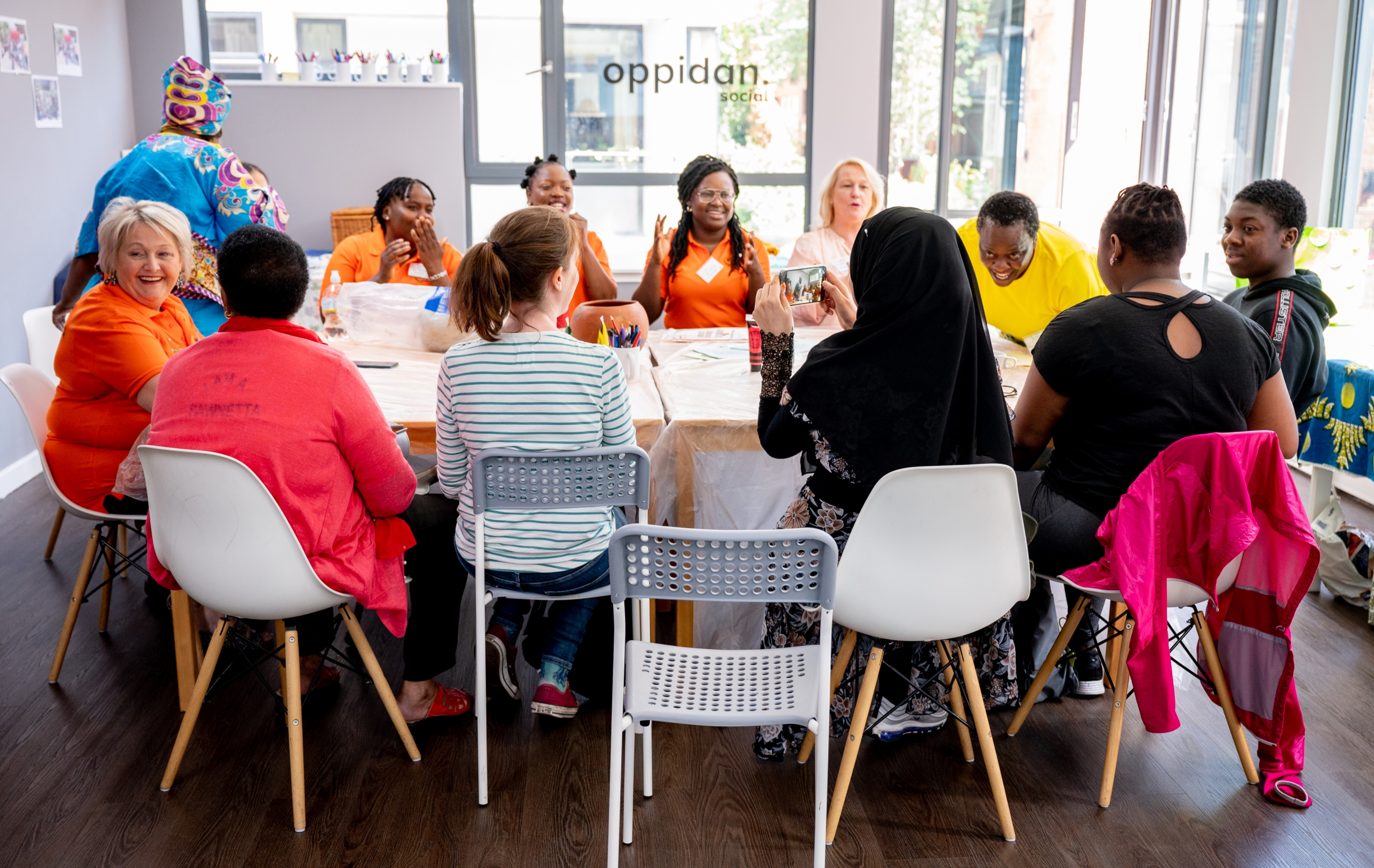
Our experiences underlined the importance of different practices to support healthier ways of being together, and powerful ways of seeing and experiencing the world as an interconnected living system.
This will be more fully integrated into our next phase of work, from 2025 onwards. Ritual, ceremony, spirituality, intuition and emotionality will all be welcomed. This is part of what we think is a necessary ‘ontological shift‘ to displace conventional mechanistic worldviews.
In recognition of the difficulties of doing this work within a hierarchical institutional model, this next phase will be outside the bounds of an institution and within a network of people with a powerful shared commitment.
Habiba suggests Alnoor Ladha from Transition Resource Circle, Mama D from Community Centred Knowledge, Farzana Khan at Healing Justice Ldn and Marai Larasi as powerful thinkers on these subjects.
Resources
-

My Experience of Working as a Relational Funder
Jenny Oppenheimer
2022
- Grant-making practice,
- Philanthropy
-

The Road We Have Travelled – Our Learning Journey
Julian Corner
2025
- Philanthropy,
- Redistribution
-
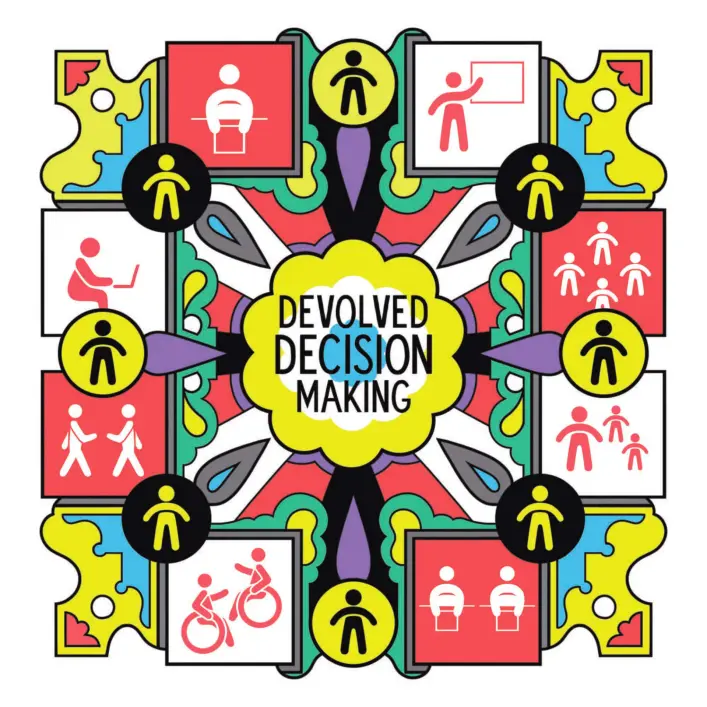
Devolved Decision Making: Sharing Power and Resources in Place-based Change Work
Max French et al
2024
- Devolving decision making,
- Philanthropy,
- Place-based work
Other related stories
-
Foundations are setting about good work and hard change but still lack self-accountability
Language out of pace with structures on the ground.
Yasmeen Akhtar Read more -
Learning through practice in systemic funding
From intent to infrastructure for grassroots power.
Generative Journalism Alliance Read more -
Lankelly Chase were courageous and willing to get it wrong
But what lives in the shadow of courage?
Dorothy Atcheson Read more