
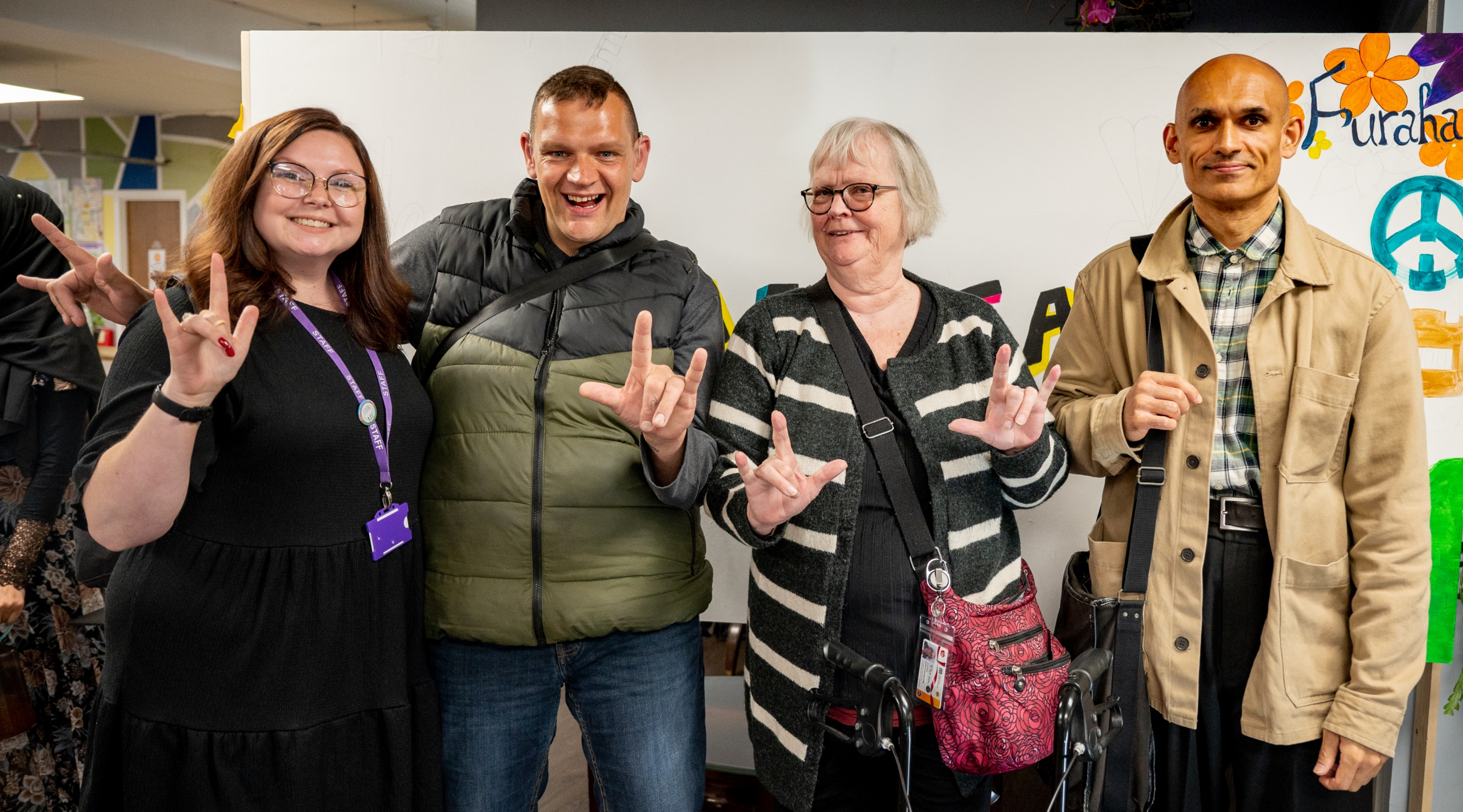
We funded many organisations providing excellent support services to people subject to marginalisation and disadvantage.
They worked in all kinds of settings, from schools to alcohol rehabilitation services, with lots of different groups of people. Their practice models were varied.
What they had in common was a commitment to embracing people’s full, complex, resourceful and messy humanity.
They did not see the people they worked with as ‘problems to be fixed’. Their relational way of working was deep and genuine. The support and assistance they offered emerged from engagement with people over time. They were reflective and adapted their approaches based on what they learned alongside the people they worked with.
In some cases we worked alongside these organisations for several years, developing deep and lasting relationships with the innovators leading the work. They were unusual; outliers in risk-averse and sometimes hostile systems.
We observed that it wasn’t the particular practice model that made the support offered effective, but rather the values, ethos and behaviours it embodied. We also noticed that these values and principles characterised the organisations themselves, including their internal operations.
The route to sustained funding for services has in the past been seen as a commissioning relationship with public institutions, or ‘mainstreaming’.
Even before austerity this was problematic, as funding through established bureaucracies has often involved organisations having to move away from what made them special in the first place.
Highly flexible and relational practice, and adaptive learning-by-doing approaches, have almost always lost out to predetermined outcomes and standardised frameworks.
As Malik Gul of Wandsworth Community Empowerment Network says in his interview, public systems are “built and designed to maintain the status quo, the silos, the bureaucracies, the administrative controls. They are not built to transform, they are built to sustain”.
Despite these challenges, many of these organisations battled to keep their ideas and practice alive in the midst of unreformed systems.
The characteristics we valued also predisposed these organisations to look outwards, and to become ‘system leaders’, applying the same principles of relationality, collaboration, reflective, learning and adaptation to the environments around them.
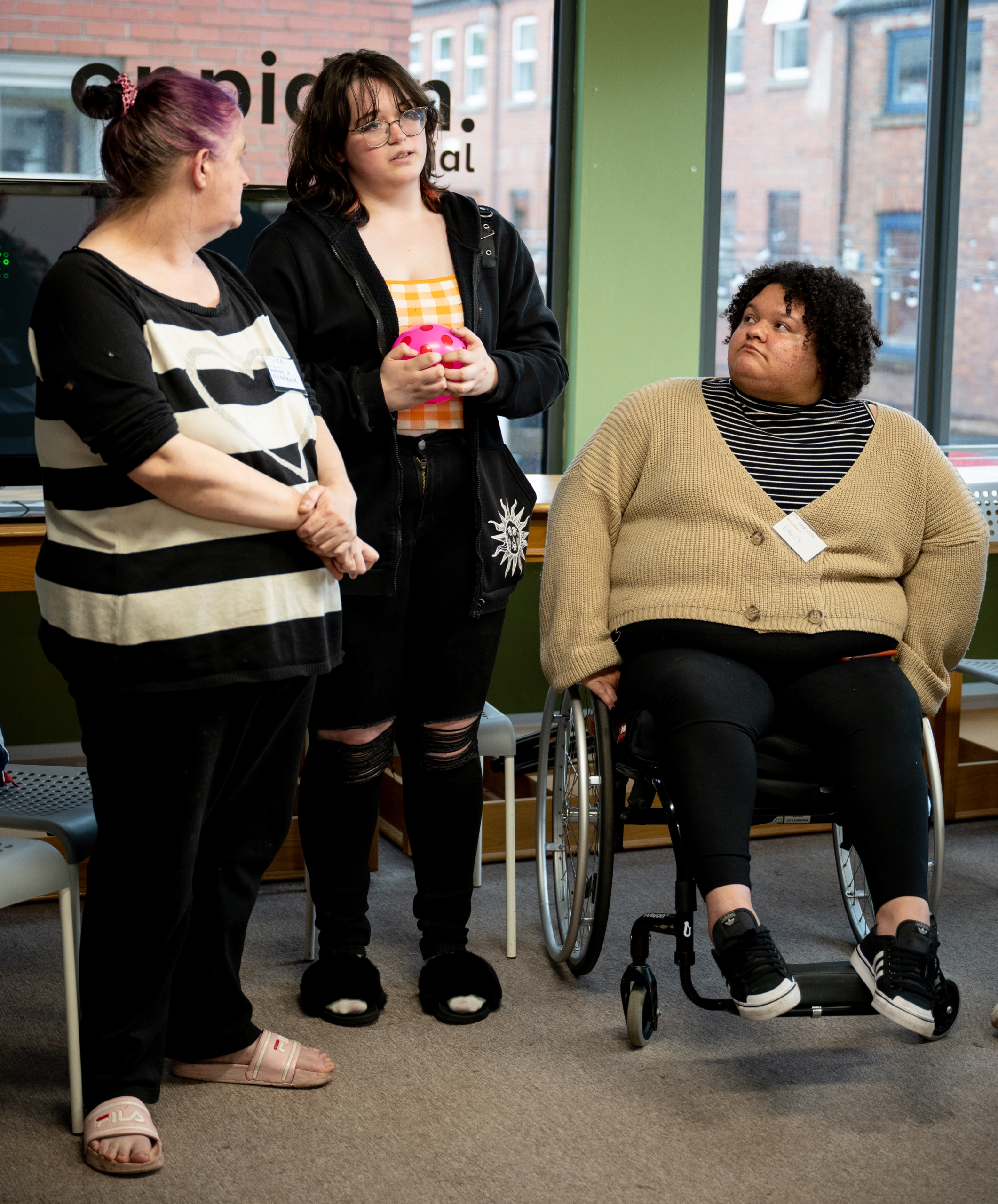
We came across innovators we admired from outside the world of charities, including inside public systems, who needed support and someone with institutional heft to get behind them.
This meant we needed to flex our funding approaches and support different kinds of entities apart from just charities. This led us to question why we previously thought that the change we were seeking would necessarily come from the world of charity.
Along with similar learning coming up through our place-based work, the realisation that underlying behaviours, values and mindsets were more important than any specific kind of intervention was significant for us.
In consultation with many people, we codified behaviours and mindsets into a set of system conditions we thought were both the means and the end. These were the ‘System Behaviours’ which guided our work for several years.


Related stories
-
Lankelly was unique, brave
Where will radical investment come from now?
Helen Jones Read more -
An honest, sometimes uncomfortable speaking of truth
Lankelly’s approach was to resist the safety and politeness that often stifles genuine change.
Emma Crick, An Untold Story -… Read more -
Address fundamental issues like power and wealth
A golden thread to make the scale of change we aspire to.
Chris Dabbs, Unlimited Potential Read more