
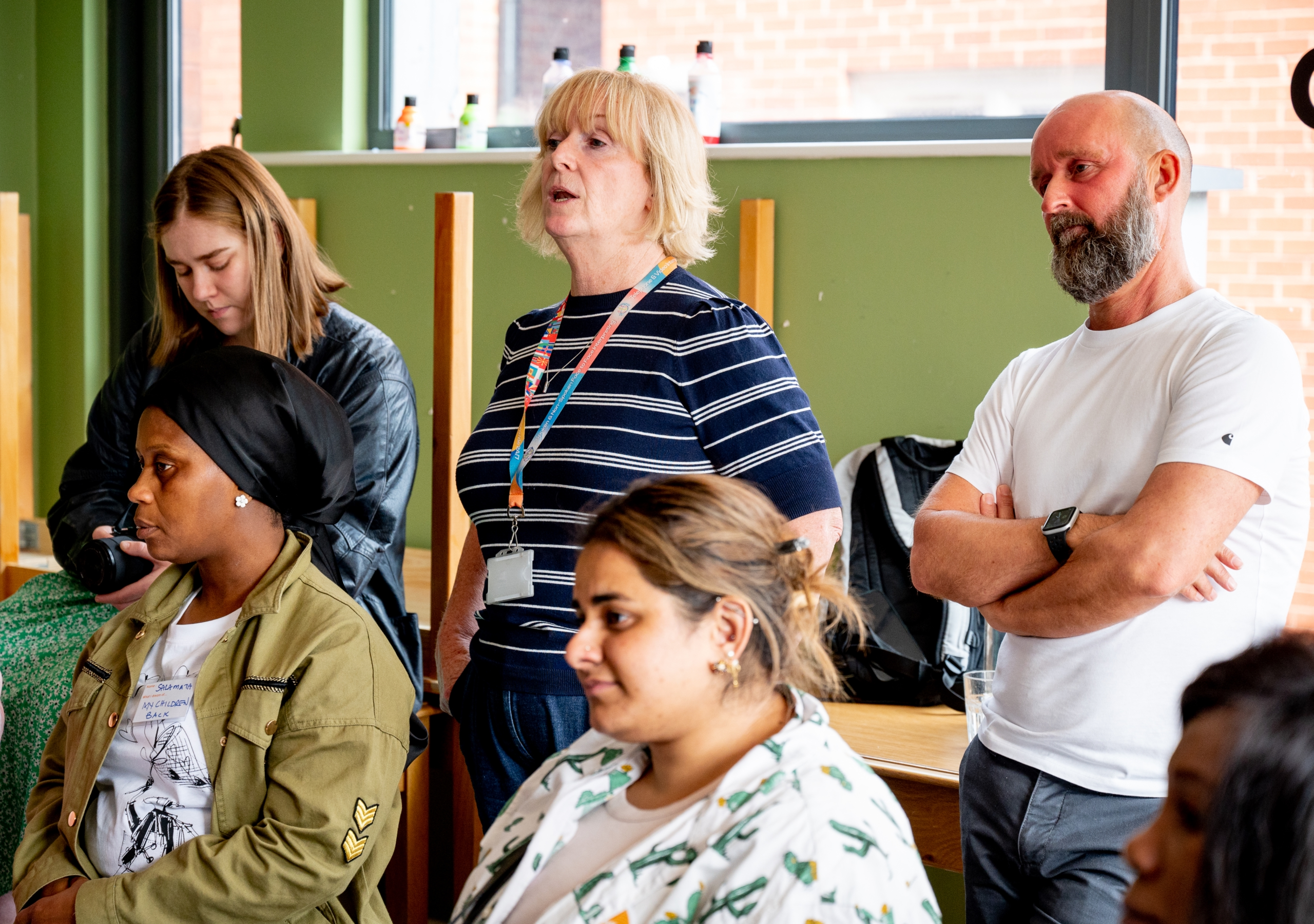
Narratives are inherently human and help us make sense of our reality.
Every day they drive our thoughts, decisions, and actions. We need new narratives that don’t seek to silence or oppress people. We need new narratives that support a transition to a world healed by justice and equity.
Lankelly’s work on narratives evolved from a research project, ‘Telling a Different Story’, which looked at how print and online news media report on severe and multiple disadvantage.
We knew that people with lived experience of severe and interlocking disadvantages were being misrepresented in the media. As one of our trustees said at the time, “as the CEO of Expert Citizens…very often I get negative labels put on me to sell my story. For example, it’s often ex-con, ex-criminal, former addict, former junkie or former homeless guy, instead of CEO or trustee”.
We also knew there was a general assumption among our grantees that the media was not interested in stories that engaged with complexity, were systemic, or looked at root causes.
Telling a Different Story was an overview of why this is, and whether it could change.
This took us in two directions:
News and media – we began to explore what might be needed for independent media to get alternative narratives and stories out into the world. We put out a call for applications to a grants fund which was co-designed with people from within the independent news and media system. This was a relatively small fund, through which we intended to better understand what Lankelly’s role might usefully be.
Narratives – we began to look specifically at the role of narratives in creating and maintaining the status quo.
If Lankelly was about systems change, narratives were fundamental to this.
The questions we used to frame this work were:
- What’s the role of narratives in guiding/leading us through the transition to a world healed by justice, equity, and inclusion?
- How can creative practices support new frames to emerge that will support the transition?
- Who are the creative practitioners subject to marginalisation doing this work already, and what additional support do they need?
- Suppose we assume that journalism (and the news and media system) holds influence over narratives. What kind of infrastructure needs to be in place to create a renewed, healthy field of journalism that centres the people whose stories are most marginalised – and who gets to tell them?
We funded some of the most creative and dynamic alternative content providers, platforms and infrastructure bodies, and provided a space for them to come together.
This was appreciated because the realities of the industry and the need to generate income meant they were usually in competition with each other. Grantees included Gal-dem, Public Interest News Foundation, On Our Radar, Sounddelivery Media, Bureau Local and Untelevised.
We supported practitioners developing and working with narrative change methodologies, including Culture Hack Labs.
As foundations tend to do, we developed our own analysis and chose to apply it in the news and media field.
One of the problems with philanthropy is that it shapes culture under the guise of ‘doing good’ based on its own interest. We don’t think the analysis was necessarily fundamentally wrong, but our financial and convening power encouraged people to focus on what we were interested in, whether that was the right thing for them at that moment or not.
We didn’t follow up our intervention in the field with proper levels of resourcing and collaboration with other foundations. This area of work requires far more funding and attention than we directed at it – at the time it was one of many workstreams at Lankelly. We dabbled, and as a foundation, we could do this without accountability.
There are very few foundations investing in news and media. The collapse of the ‘legacy’ news and media system is real and happening very quickly.
There is a desperate need for a healthy, independent media system which isn’t owned by oligarchs, but no one is really grappling with what the business/resourcing model is that will sustain this alternative.
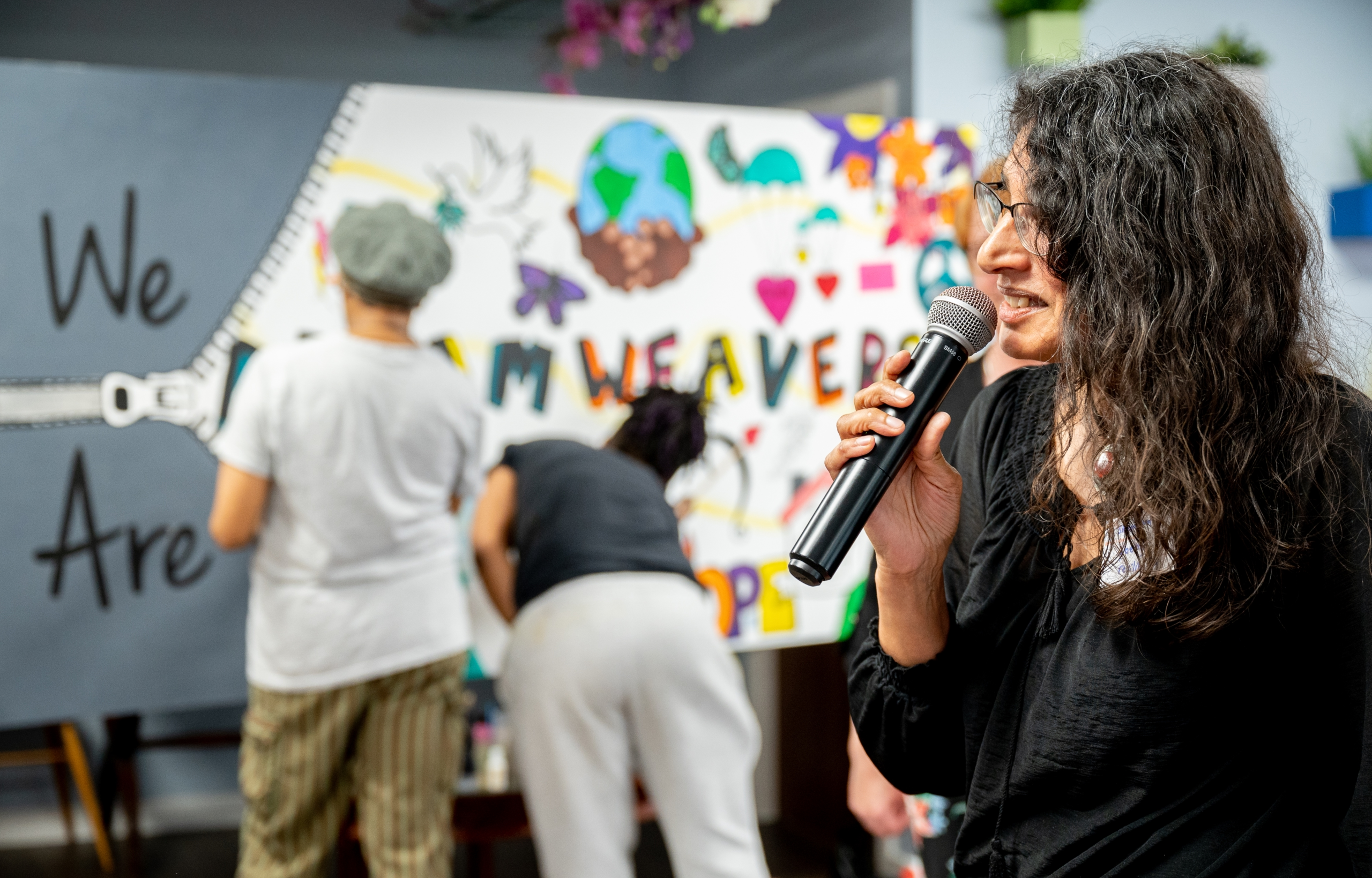
A recognition of the importance of narratives, and the way they shape reality and determine what we take for granted, became central in our work.
This led to an awareness of the ‘ontological shift’ that is necessary for ecological and social prosperity. This is the need to embrace fundamentally different ways of knowing and being from what is taken to be ‘normal’ within 21st century capitalism.
Resources
-
Telling a Different Story
DHA Communications
2019
- News and media,
- Severe and multiple disadvantage
-
An Untold Story: Experiences of Life and Street Prostitution in Hull
Various authors
2018
- Severe and multiple disadvantage,
- Women and girls
-

Why We Need to Tell Different Stories
Carrina Gaffney
2020
- News and media,
- Severe and multiple disadvantage
Related stories
-
When trust transforms the power of relationship driven narratives
Opening doors to hidden voices.
Jude Habib, Sounddelivery Media Read more -
Lankelly will have ripple effects
They’re going out with noise and defiance because they don’t agree with how things are done.
Ursula Myrie and Nigel… Read more -
Buy bricks and mortar for local newsrooms
Secure independent small newsrooms across the country.
Joe Mitchell, Public Interest News Foundation Read more