
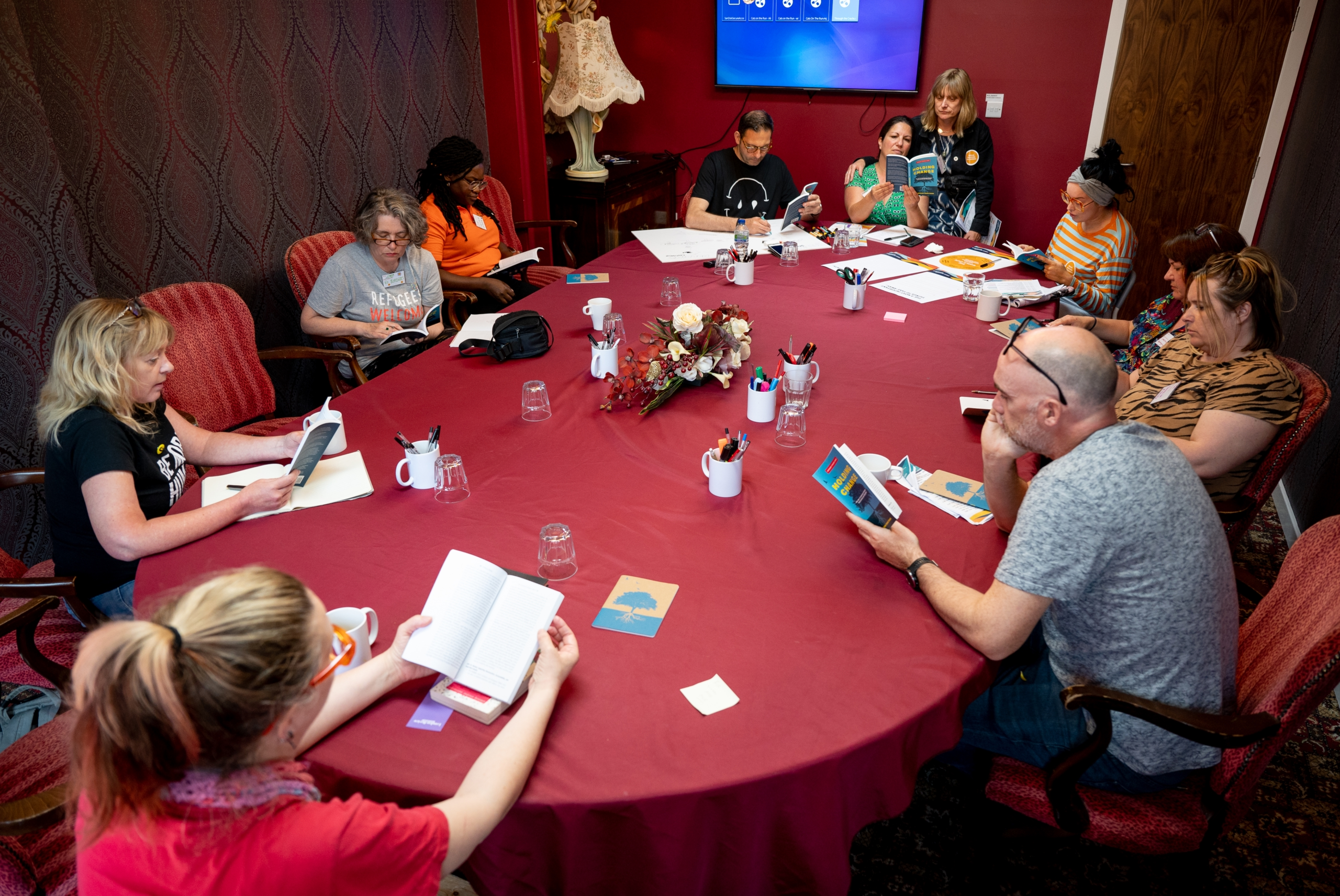
As Lankelly tried to embody principles of mutual accountability and equality of voice, we kept bumping up against structures, policies and decision-making frameworks which got in the way.
One example was our work to shift power and decision-making over money from our board to the team, and then into the communities we were working with. In order to do this, and to support the people making decisions, we had to alter our systems, processes, mandates and practices.
This was part of a wider action inquiry about enabling ‘transformational’ governance (a term borrowed from the field).
We took part in work such as participatory grantmaking (PGM), which by its nature required different ways of organising and making decisions. We didn’t think PGM was an end in itself because the terms are still set by the funder, but we were interested in the processes and how people felt as a result of being involved.
We funded work in the field by thinkers and doers, often working in generous and open collaboration, who were designing, practising, learning and sharing new modes of organising and governance. One example was Beyond the Rules. This is their explanation of the importance of this work:
“Without ways of organising and governing that devolve agency and embrace interconnectivity, we don’t believe we have a pathway to a future of dignity, safety and joy. We think this means alternative governance capabilities and rules to the current norm, via a boringly bureaucratic revolution that can underpin radical possibility”.
We joined these collaborations and networks as active participants, often spending as much time with them – and feeling as much accountability to them – as Lankelly colleagues.
Over time, our thinking shifted from trying to nudge the existing system to reimagining something new. We moved away from the ‘reform’ space and towards the ‘new paradigm’ space, and looked for people who were already experimenting here. This relates to other areas of our work and the ‘ontological shift’ we came to believe was necessary.
Through all the work Lankelly supported over the years, many people were involved in some sort of participatory or distributed process, where governance and accountability have been thought of differently.
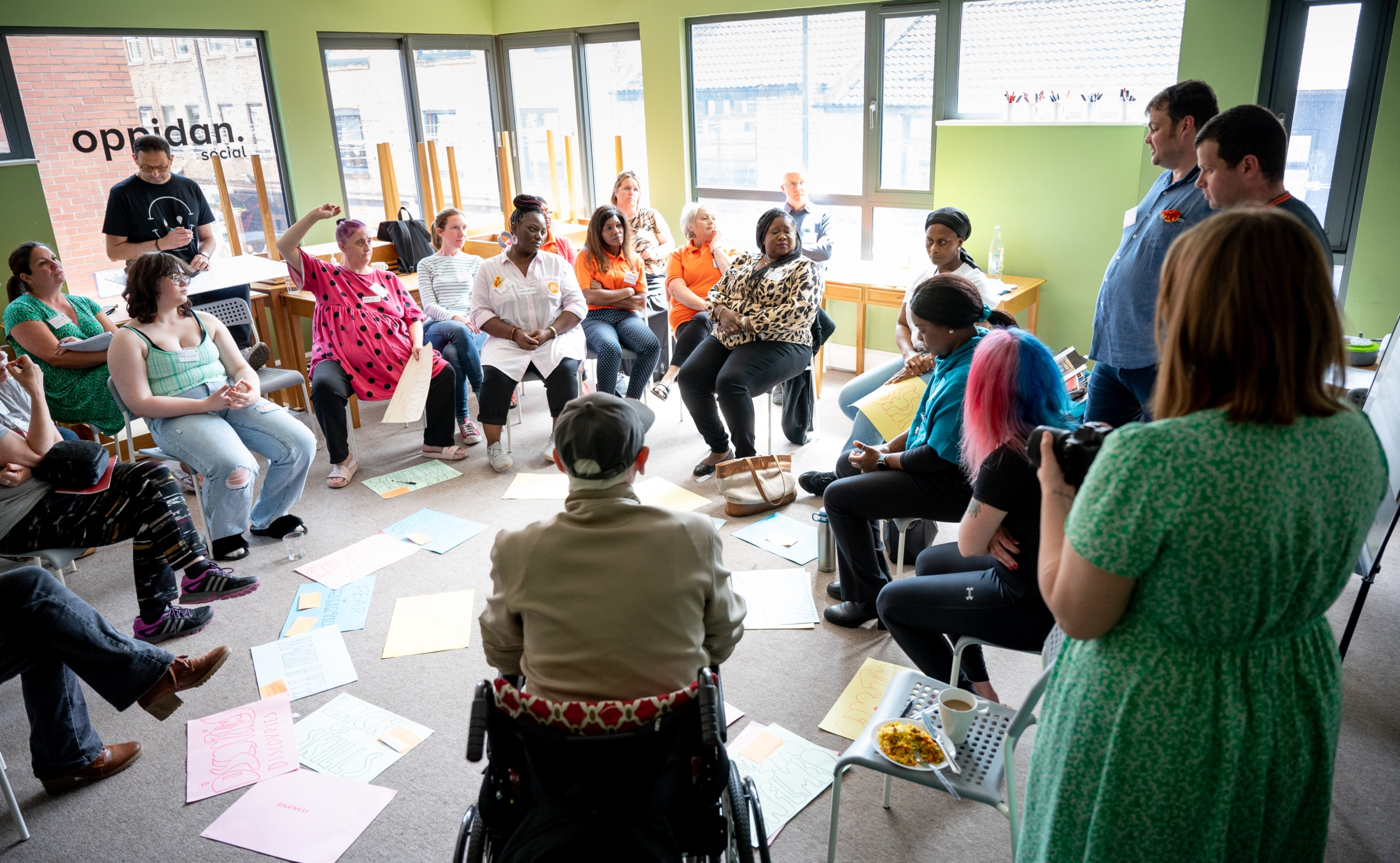
At our best, we created space to experiment with structure and process, so people could test out what it feels like, and what they need, to step into power and agency. What’s shown up is that people really value these spaces, and that having different people in the conversation, with different structures and practices, helps different things to emerge (as confirmed by the changes in Lankelly’s own governance).
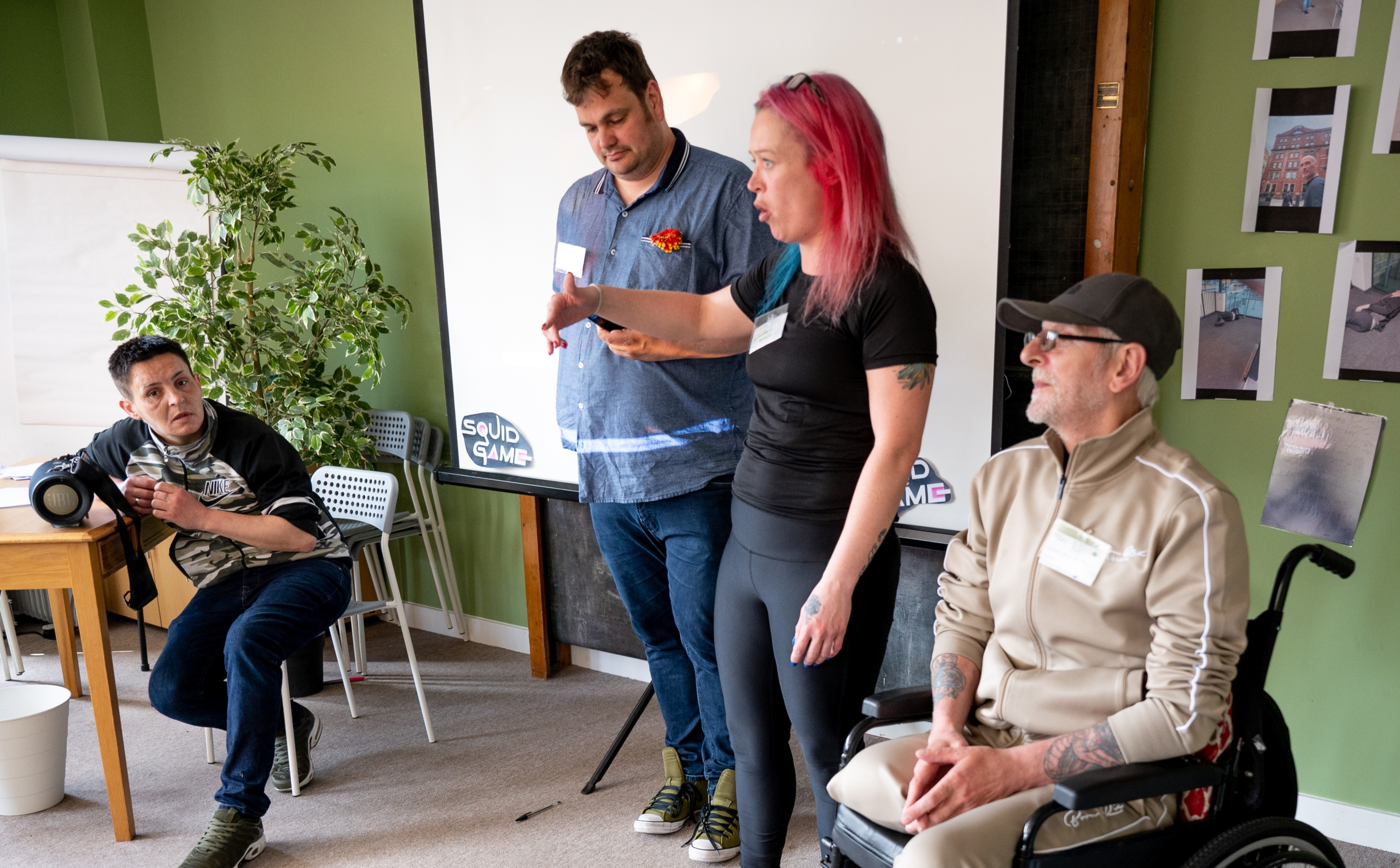
There were many positives, but we also learned that when you shift power and decision-making, you also shift their burdens.
Lankelly had the resources to buy in the support it needed. But when we shifted decision-making power out of the organisation, we didn’t always provide enough access to support for people to manage the accompanying burdens.
We learned that people in communities who might be going through a hard time don’t necessarily want to take on extra responsibility for decision-making. Foundation staff, in contrast, are generally privileged, secure and well resourced. We saw how vital it was for devolution to include resourcing people properly to do the work, including training, skills development, capacity building and attention to well-being. We didn’t always fully attend to this.
Funders also need these things, but in a different way – capacity-building their ability to give up power.
There are roles that sit in the middle, between money/power and community. These are people who have the experience of working with community groups and individuals, as well as with the powerful organisations (funders) seeking to devolve decision making. This is a very demanding position and people in this role can be harmed, especially when they are in relationship with people who are experiencing ‘terror’ (trauma, systemic harm, extreme poverty etc) right now. Funders (including Lankelly) can exploit people doing this hard work.
We also place them in an impossible position, where control over the whole process, what is in and out of scope and what is possible, is still firmly with the large institution, which can pull the plug at any time and walk away without consequences. This creates illusions of shared power and can feel like gaslighting.
We found ourselves having to repeat the same cycles over and over.
When we set up, for example, a participatory grant-making process, everyone would go on a journey together. However, at the point when we tried to widen the group or extend the learning and include others, there would be a ‘starting again’ process. It seems that all of us have to experience something new before we get it.
We’d now say you need a long lead-in for relationship building to provide strong foundations for experimenting together, testing new approaches and working through learning cycles. It comes down to can we create enough time and space to be in relationship to do the work together? This must include proper resourcing for anyone in the room. Processes should always be ‘poverty intolerant’.
If we were doing some of this work again, we’d be more intentional about bringing all the wisdom and expertise together at one time. This would mean the thinkers and the doers, the facilitators and technical experts, and those who know about infrastructure and scaffolding would all be practising together.
Even in writing this, we are conscious that our language puts the funder at the heart of the process: bringing people together, setting up initiatives. Especially in work which is so explicitly about power relations, we question whether this is desirable and ethical. If not, how can such work be enabled?
Beyond the Rules have a great notion site with lots of resources.
There is also a Transformational Governance medium site.



Related stories
-
Become a systems change funder
How to fund the change when you’re part of the problem.
Alice Evans Read more -
Devolved decision making revolutionary in Manchester
What is it like for a local team to hold money and make decisions on their own behalf?
Paul Connery, GM Systems Changers Read more -
Resource redistribution has been liberating and equalising
To centre communities rather than philanthropic folk would mean we would be so much better connected…
Angela Fell,… Read more