
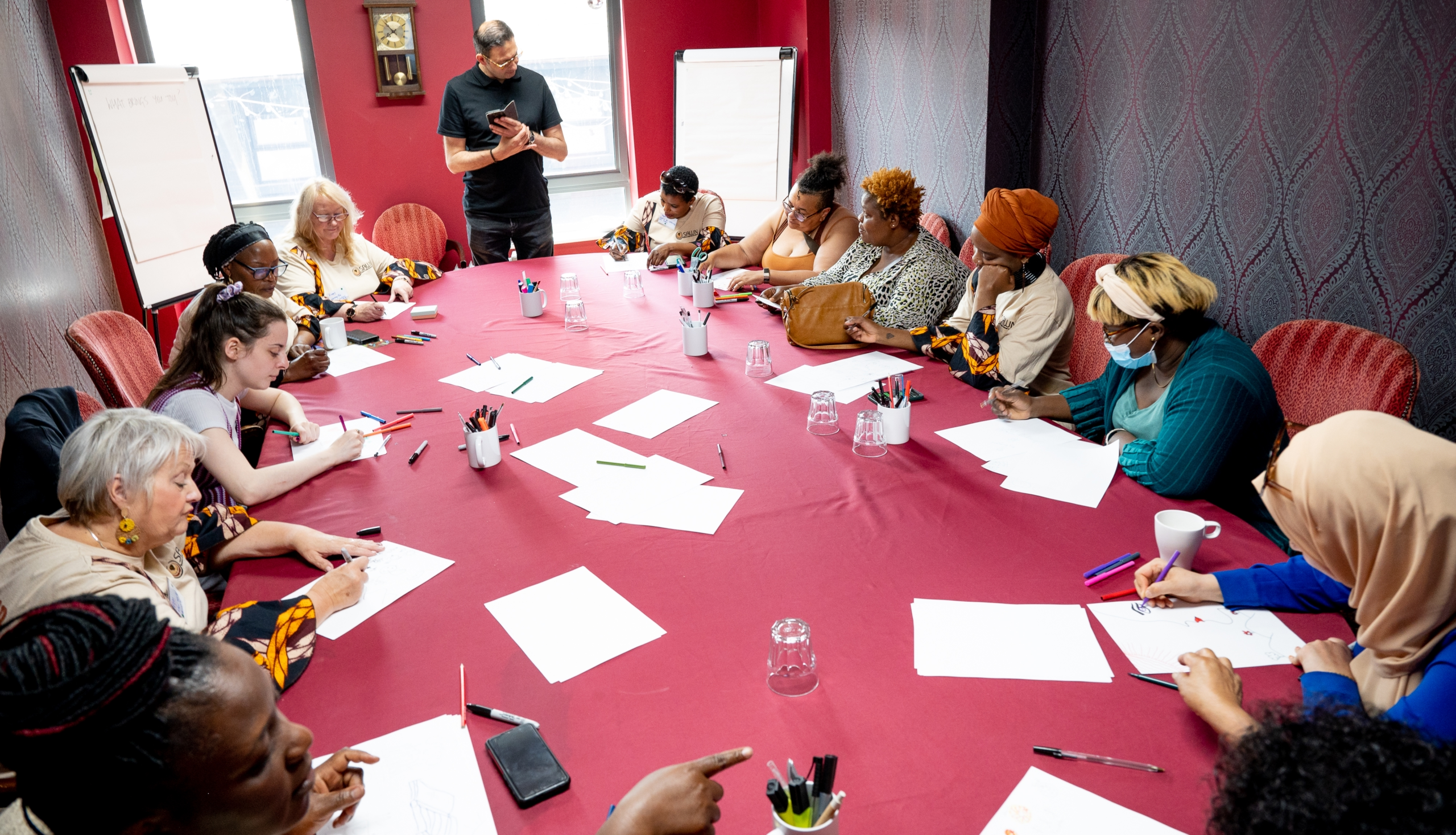
We developed deep learning- and trust-based relationships with grantees and networks.
We took on a more deliberate convening and capacity building role, including providing bespoke ‘funder+’ support.
We worked on our own positionality, with the Lankelly team being trained in non-directive approaches including coaching, to try to minimise power imbalances – in particular the temptation to weigh in with advice to grantees.
We commissioned ‘learning partners’ rather than ‘evaluators’ to work alongside grantees, and tried to work with integrity and ethics around themes of accountability and performance.
We understood that our own mission entangled us in the work we were funding.
We wanted to develop active, not passive roles; to get alongside the work and learn with and from the people involved. Our action inquiry approach required this.
We also wanted to build relationships of mutual commitment and accountability as a way of trying to mitigate power dynamics. We were trying to ‘be the change‘ we wanted to see in the world.
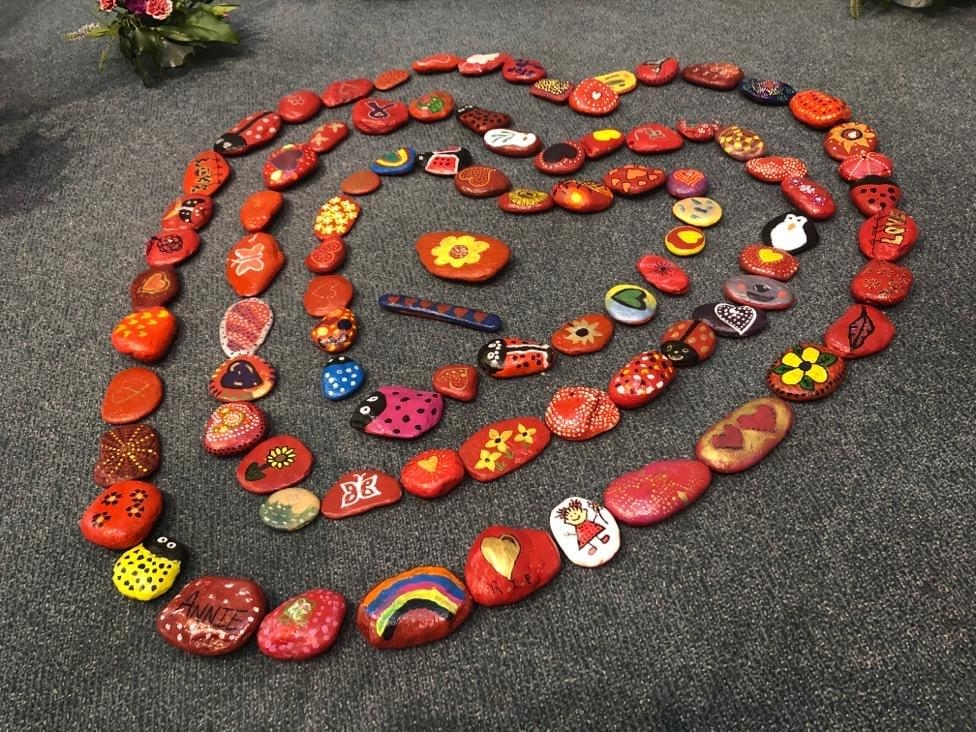
In some cases we became a trusted partner, colleague, investor and advocate. Many grantees ‘came for the funding, and stayed for the partnership’. There was enough trust to speak truth to power.
We seeded and strengthened connections, relationships and networks between grantees and communities, many of which will remain with or without us.
At its best, the collaboration and ‘role fluidity’ between Lankelly and grantees could see colleagues on all sides equally likely to be undertaking due diligence, facilitating meetings, leading collective learning conversations, framing multi-year budgets, making resourcing decisions, and supporting and broadening the community involved in the work.
We carved out much-valued space for inquiry, learning and innovation which could happen off the treadmill of the justificatory, unconvincing outcomes and impact frameworks commonly requested by other funders.
This gave people the freedom and support to do their best work, and to develop their practice and organisations in ways determined by them. Lankelly funding supported and enabled this, rather than being imposed under unrealistic expectations or surveillance.
Our initial support and trust enabled a variety of new, experimental or ‘risky’ projects – as well as experienced practitioners who still worked at the margins of the mainstream system – to gain a foothold in the world and attract more funding and support from elsewhere.
Convenings didn’t always go well and our ‘matchmaking’ could be hit and miss.
We perhaps kidded ourselves that people were showing up because of the brilliant spaces we were convening and the learning on offer, when the power dynamic of ‘playing nice with the funder’ was still the defining feature of the relationship.
We weren’t always taken seriously in the new roles we were trying to develop for ourselves – it took time to grow into a different kind of relationship. At times we tried too hard to reject the ‘funder’ role, rather than wearing its inevitabilities well. We rarely aimed to ‘get out of the way’, which is what some grantees might have preferred to deep and meaningful conversations which they felt obliged to participate in.
Not everyone in the field gets on, and there is no year zero or blank slate from which to build a collaboration. There are (sometimes personal) histories of competition and suspicion which aren’t wiped clean by a bit of Lankelly Chase funding – they might even be exacerbated.
There were times when people were harmed in inequitable spaces that we’d encouraged them into, but didn’t have the expertise to hold.
Whilst we lost interest in (or rejected the thinking behind) ‘traditional’ outcome measures, this didn’t reflect the rest of the field, of which we’ve only ever been a small part. This meant organisations still needed the language and ‘evidence’ to convince others of the merits of their work, and we could’ve done more to support them in serving that part of the system.
Whilst our methods and principles enabled us to fund ‘at the margins’, being a sole or majority funder for organisations and projects can mean very high-stakes relationships. This could work against the open and trusting dynamic we were trying to build.
Getting the balance right between ‘stepping in’ and ‘stepping out’ – sharing power versus exercising it well – has always been tricky, and we didn’t get it right all the time. Some grantees experienced ‘giving space’ as abandonment and lack of commitment, whilst others experienced ‘support’ as overbearing interference.
For some colleagues, real trust meant getting out of the way and funding work on a more prolific scale, with or without our direct involvement or influence. Our movements funding looked much more like this.
Once the redistribution decision was made, the processes of dismantling the foundation and exiting from funding relationships were harder to deal with than if we’d been a distant, hands-off funder. Some people felt they had been invited into relationship with us on a different basis to a ‘normal’ funder and felt let down and excluded when our strategy fundamentally changed. An exploration of some of the dynamics involved in being a ‘time-limited funder’ can be found here – a record of a peer learning group Lankelly was a part of.


Related stories
-
Lankelly was unique, brave
Where will radical investment come from now?
Helen Jones Read more -
How do we ensure our actions don’t replicate the exclusion we strive to dismantle?
It’s a question that, for me, remains the true legacy of our work together.
Max French, Northumbria University Read more -
Lankelly were looking for rough diamonds to polish
Lankelly Chase’s closure is bold and necessary, but will it be a beacon to the rest of the philanthropic sector?
Yvonne… Read more