
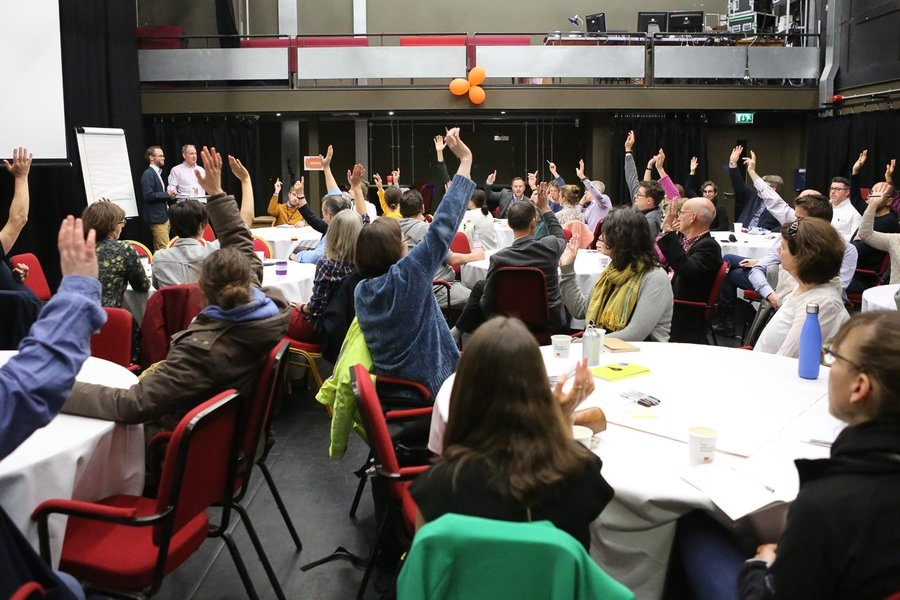
We experimented extensively with devolved and distributed decision making – away from the board, through the staff team, and further into the places and fields in which we were working.
At first, the whole staff team were given delegated authority to approve grants up to £300,000. This was followed by mandates for smaller subgroups of staff and different approval thresholds (eg pairs of colleagues could sign off grants up to £50,000, and individual staff members up to £10,000).
This exercise was backed up with data analysis on the how many grants we had been making (and of what sizes) under the previous system, with appropriate limits and safeguards put in place.
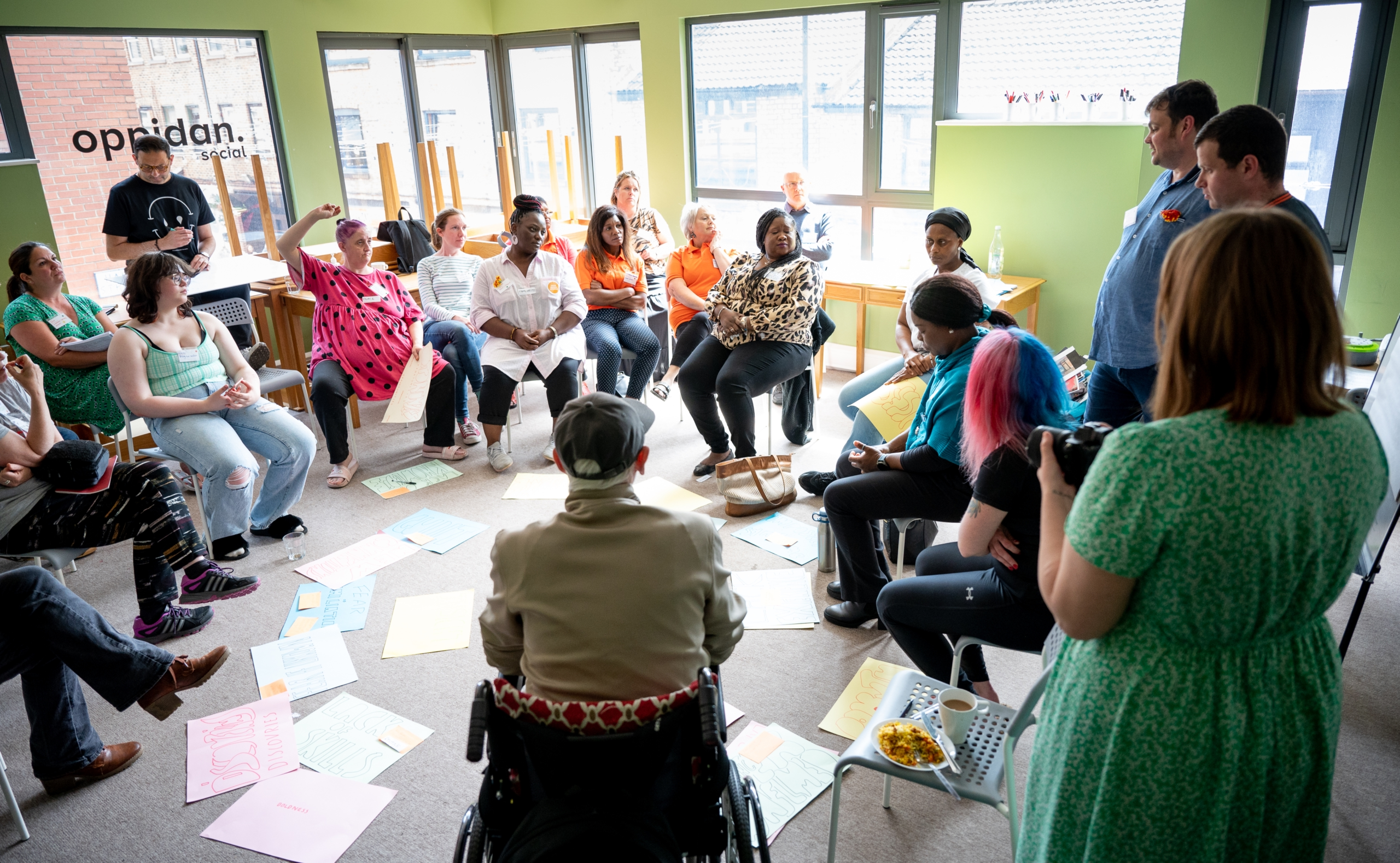
In our Place work, we incorporated grantees, partners and community members into local decision making and resourcing structures which operated at arm’s length from Lankelly Chase – firstly with staff still in the majority, then with us in the minority, and finally in our absence.

Julian Corner, our CEO gives an overview of the rationale and development of this work
This was a demonstration of the board’s trust in the staff team to fund work which furthered our inquires and mission.
It was also a principled commitment to sharing power, both within and outside the organisation.
It was intended to enable more agile and responsive grantmaking; rather than waiting for quarterly grants committees, funds could be approved more regularly and in different ways.
This cleared away what we saw as an artificial barrier in allowing money to flow to vital social change work.
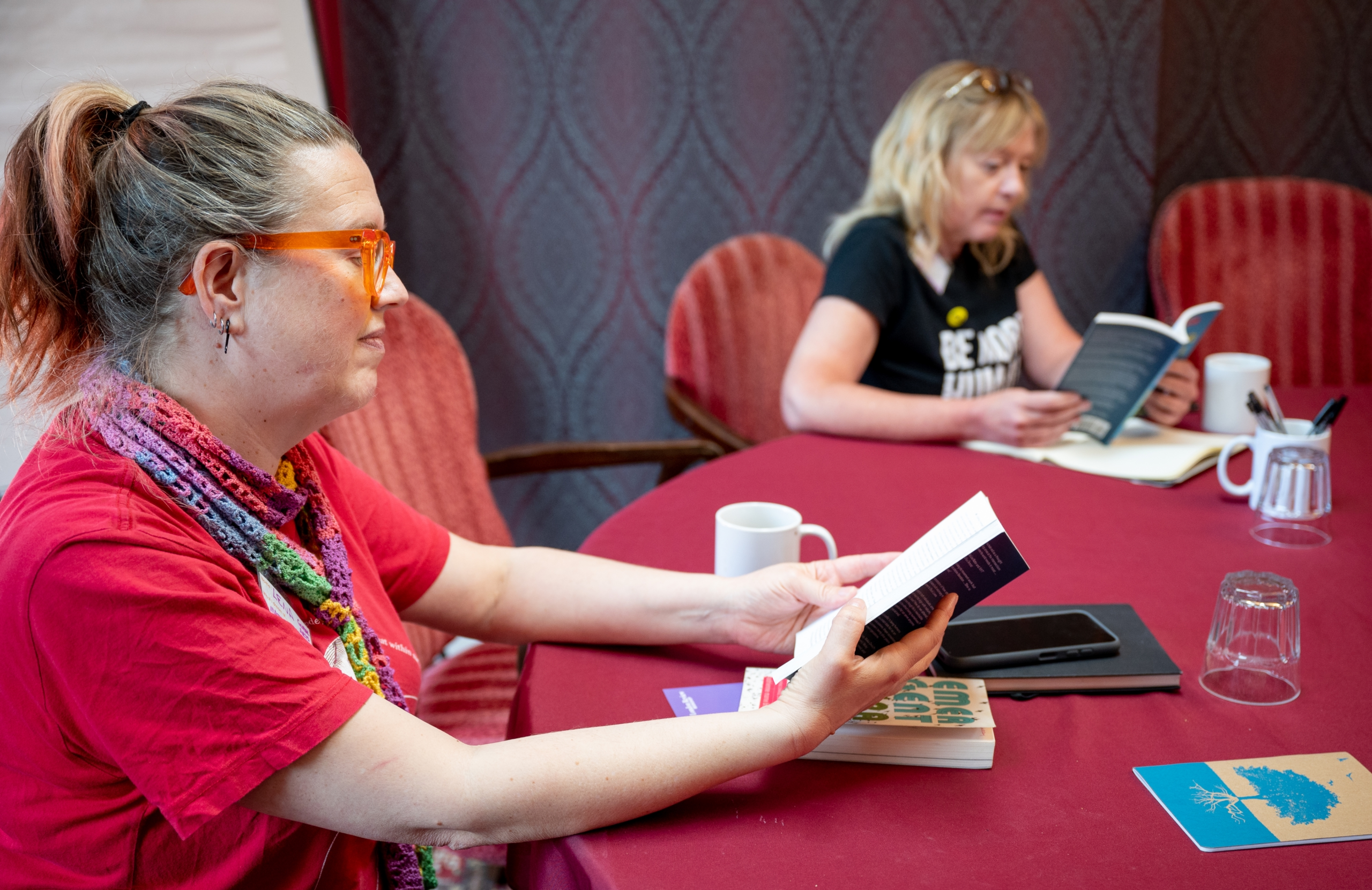
Overall, this strategy enabled us to release more money, to more work, with the involvement of more people and groups.
It enabled us to release more resources by unblocking the pipeline to funding approvals, and there was a rapid expansion in the number of grants we were able to make – as confirmed in our data.
At our best, the staff, partners and workstreams thrived under a culture of trust, flexibility, freedom, independence and mutual support.
Unsurprisingly, partners also valued having a involved advocate with access to resources, which was a deeper relationship than a grants officer putting proposals in front of distant boards and committees.
Although we’d also supported participatory grantmaking approaches, the devolved decision making strategy shared a deeper level of power and responsibility, and provided groups with more ongoing and strategic oversight of work and budgets.
In some cases we overestimated the desire of grantee networks, particularly in places, to take on funding decisions themselves.
Sometimes it felt less like a genuine and welcome sharing of power, and more like handing over a hot potato – and whilst Lankelly staff had something akin to oven gloves which provided some institutional insulation, local partners felt bare-handed and burnt due to their visibility and entanglement in the networks in need of resources.
So whilst grants spend rose rapidly within the staff team under devolved decision making powers, there could actually be a pause or slowing in locally-based teams, as they got to grips with their new responsibilities and how to navigate the accompanying changes in roles.
Networks could also underestimate the amount of capacity needed to hold and administer funds – so whilst the decision making responsibility was being shared, the administrative capacity was bouncing back to Lankelly. This was a gift we could offer the work, but it sometimes took time to establish mutual expectations. (And to be honest, admin was never our strongest suit, as many grantees can attest).
In the staff team, some silos (re)formed around different areas of work, relationships and inquiries, as the gap between the individual lead and the rest of the team had a tendency to widen.
This meant that in terms of decision making, scrutiny and challenge sometimes gave way to ‘you know best, so go ahead’.
With the staff team responsible for financial decisions, and individual colleagues responsible for bringing proposals, there was no governance firewall, and no release valve for the pressure of approval or rejection. Without a ‘sorry, the board said no’ to hide behind, staff had to own up to their own power and influence. (This could be seen as a positive!)
Grantees and partners sometimes found it difficult to participate in conversations about funding others whilst their own jobs and organisations still existed in states of precarity.
Compared to 2015, grants spend had doubled by 2020, and trebled by 2023.
In retrospect it’s unclear whether this was more a reason for, or a result of, our devolved decision making strategy. Probably both.
Arguably, we could not fulfil the intention behind our devolved decision making efforts whilst retaining the structure and powers of an endowed foundation, because we were still creating the parameters and setting the agenda.
There’s a clear thread through to the decision to cease operating as an institutional funder.
Resources
-
Devolved Decision Making: Sharing Power and Resources in Place-based Change Work
Max French et al
2024
- Devolving decision making,
- Philanthropy,
- Place-based work
-
‘How Lankelly Works’ – Internal Structure
Cathy Stancer
2021
- ‘Being the Change’,
- Devolving decision making
-

Transforming Lankelly Chase’s Governance
Julian Corner
2020
- ‘Being the Change’,
- Governance,
- Philanthropy
-

Decision making guidance for staff
Alice Evans
2021
- Devolving decision making,
- Governance,
- Grant-making practice
Related stories
-
Devolved decision making revolutionary in Manchester
What is it like for a local team to hold money and make decisions on their own behalf?
Paul Connery, GM Systems Changers Read more -
Lankelly did some very daring stuff
But we still only have pockets of change, not a global push.
Esther Foreman, Social Change Agency Read more -
How do we ensure our actions don’t replicate the exclusion we strive to dismantle?
It’s a question that, for me, remains the true legacy of our work together.
Max French, Northumbria University Read more