
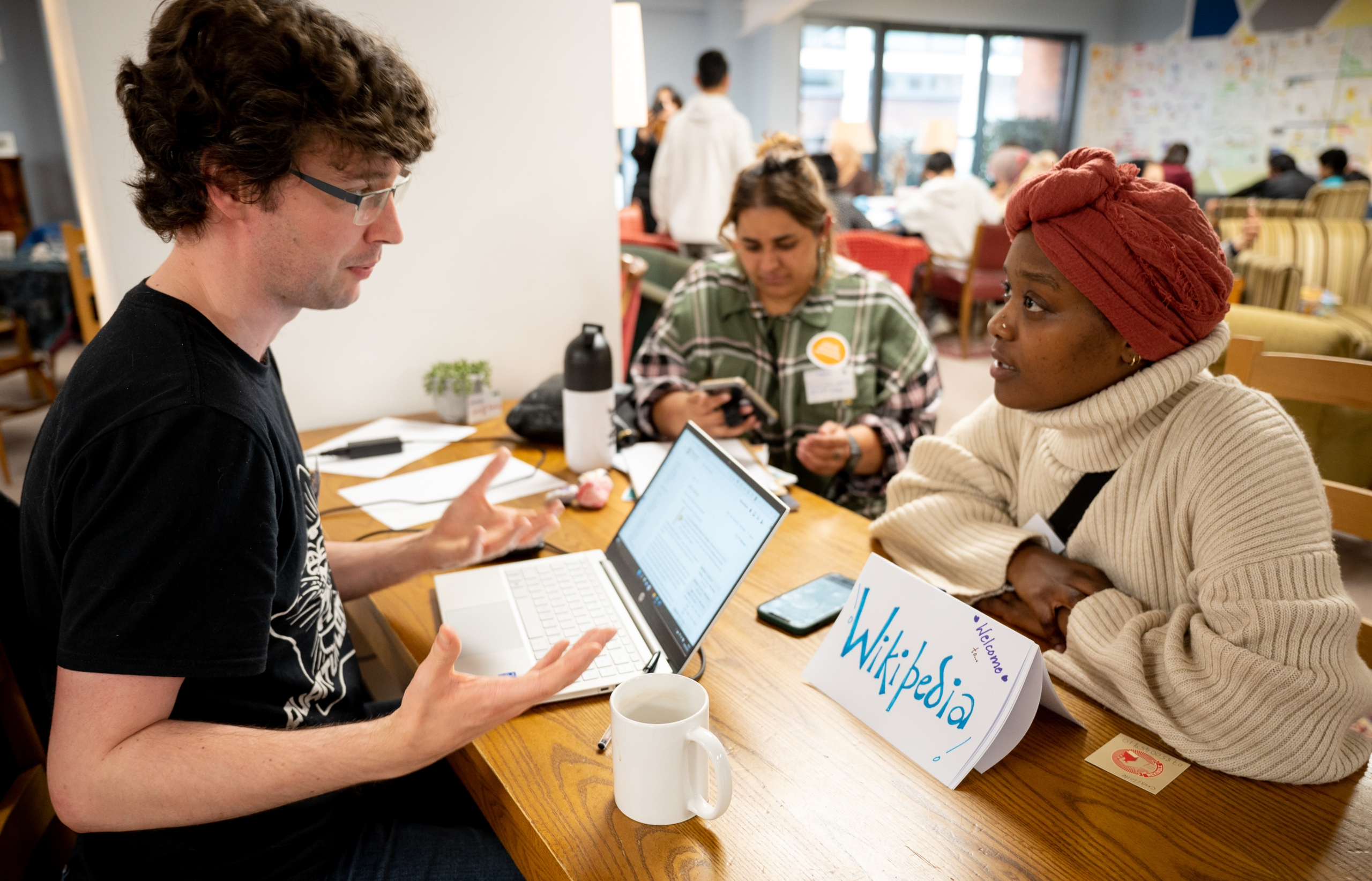
We gave staff more developmental and proactive roles in resourcing and working alongside activity which furthered our mission.
We wanted to focus on a core set of partnerships which we were already involved in, and scope out new opportunities away from the production line of applications, shortlisting meetings and decision-making committees.
In any case, our process wasn’t as ‘fair’ or ‘open’ as we liked to believe. Detailed analysis of our funding process confirmed that hardly any of the grants we’d been making actually started off as unsolicited proposals.
It was much more likely that ideas and relationships which staff had helped to nurture and encourage would find their way in front of the Grants Committee (as it was then).
Rather than denying or attempting to ‘correct’ this, we decided to embrace it, and gave the team more explicit freedom and direction to develop their own inquiries to further our mission.
If the first step in an application process is one party trying to convince the other of their worth and merit, and being judged competitively against others trying to fit the same criteria against a backdrop of scarcity and uncertainty, then this emphasises the separation between ‘funder’ and ‘grantee’ and makes it hard to develop relationships of honesty and trust.
We concluded that ‘pitching mode’ wasn’t the way we wanted to start a good partnership, and it was better to find and develop relationships where we could start from shared questions, interests and values – refining ideas together rather than picking them apart separately.
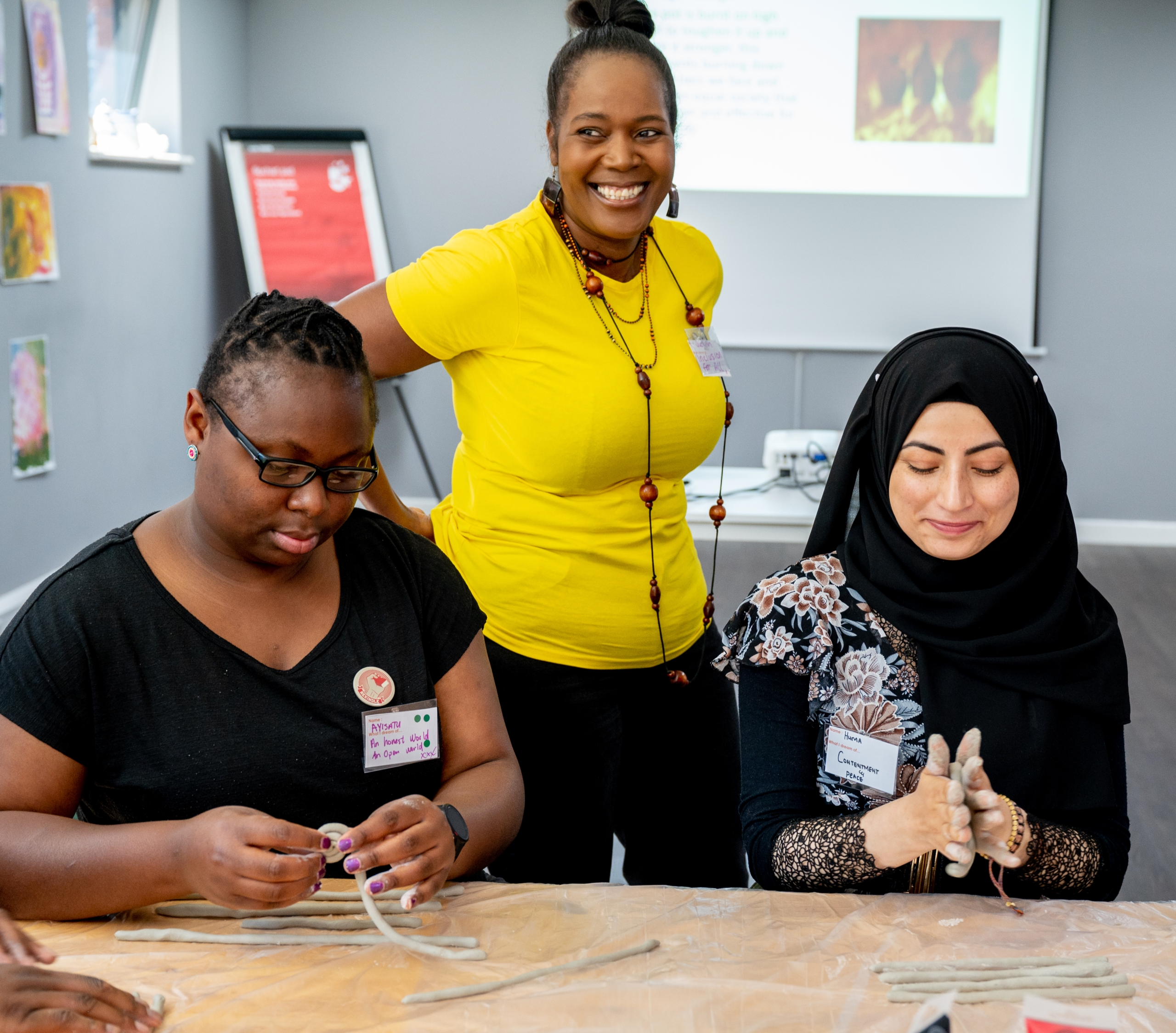
Working in this way dialled down the sense of peril and performance: people stopped selling an ‘innovative idea’ that would ‘work effectively’ and ‘deliver strong outcomes’ based on their ‘proven track record’ – and opened up the potential for learning together in a complex environment addressing interconnected social harms.
We could focus on principles, values and the ‘how’ of the work, rather than over-emphasising an over-engineered ‘what’.
This approach gave the staff considerable freedom to nurture funded relationships based on mutual support, trust and learning.
It gave us room to act as an organisation with considerable resources, pursuing a shared mission with others in the field. Coupled with an expanded decision making mandate for the team, this transferred a considerable amount of power downwards and outwards.
Developing networks and relationships enabled Lankelly to ‘fund at the margins’ and find individuals, groups and organisations who might not see (or have the capacity to respond to) things like ‘funding calls’ from national foundations.
This also enabled us to resource people and groups with lived experience of disadvantage and marginalisation, including those outside traditional institutional setups.
Whilst a networked, staff-driven resourcing approach opened up some doors, it closed others. Though we knew our old approach wasn’t truly ‘open’, what replaced it was even less so.
Without clearly advertised criteria or application guidelines, it was difficult for people who didn’t already know us to establish the foundations of a relationship. This meant the grantee network could be a special and valuable community to those inside it, but seem cliquey and inaccessible to those outside.
Even for established partners, one person’s ‘freedom and flexibility’ was another person’s ‘maddeningly vague’; even amongst the welcome levels of trust and sense of shared mission, there was still demand for clarity on our ‘red lines’. We saw that it can take more effort to start a funding proposal from a blank sheet of paper than it does to fill in a standardised form.
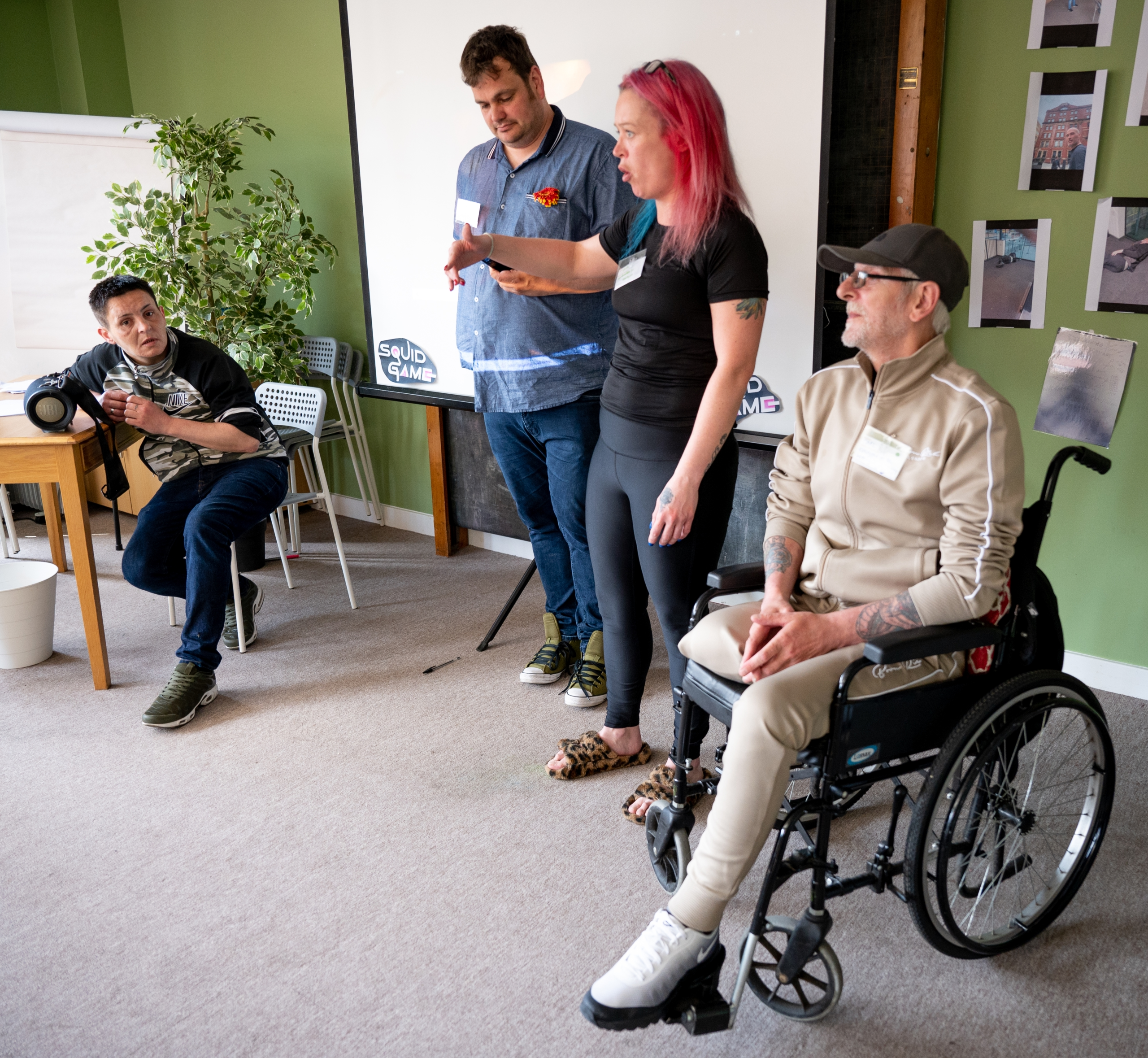
We consolidated our work into fewer, deeper relationships, which gave us (and the grantees) space to learn and to breathe.
When we wanted to expand again as our strategy continued to evolve, we did so more confidently.
Staff became more deeply entangled with the networks of changemakers they’d been finding, joining and supporting. We became the main funder of many experimental, marginalised or precarious organisations and initiatives.
New team members and trustees questioned the reliance on networks, and the exclusivity that could result, especially as everyone was dancing around a mission and strategy shaped by us.
Regardless of good intent and conscientiousness in building networks, we still had a limited field of vision. Our ability to direct substantial resource from this position felt more and more jarring.
There seemed to be no ‘right’ way to be an institution with the responsibility to allocate money.
Resources
-

Grant Terms & Conditions
2020
- Grant-making practice
-

The Road We Have Travelled – Our Learning Journey
Julian Corner
2025
- Philanthropy,
- Redistribution
-
Due Diligence Process
2021
- Grant-making practice
-

Lankelly Chase’s Approach to Working with Complexity
Julian Corner
2018
- ‘System Behaviours’,
- Complexity,
- Systems change
Related stories
-
Develop longer term, more open partnerships
Allow grantees freedom to experiment and trust them to get on with it.
Katharine Sacks-Jones, Become Read more -
Lankelly empowered many people to challenge the status quo
That battle goes on—but now we’ve lost a valued advocate and vital resources too.
Sohan Sahota, BAC-IN Read more -
Learning through practice in systemic funding
From intent to infrastructure for grassroots power.
Generative Journalism Alliance Read more