
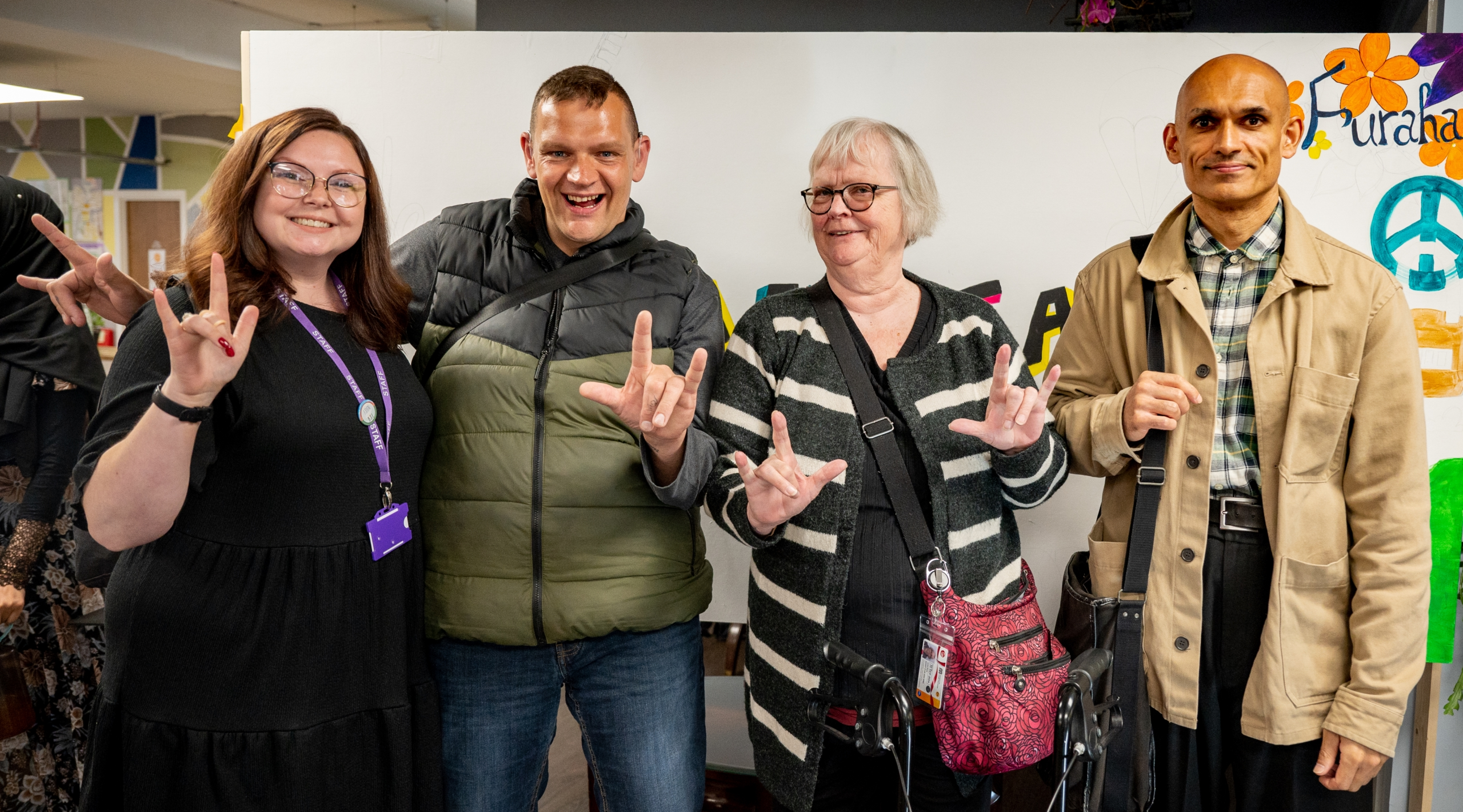
We had been thinking deeply about what our investments were doing in the world, and taking steps towards greater mission alignment.
We wanted to make sure all our activity – programmatic or investment-related – supported the same mission.
In our programmatic work across place, movements and ‘nurturing alternative realities‘ we had been exploring various participatory models of governance and decision making in order to shift power. This included collaborative decision making over Lankelly’s grants budgets.
However, decisions about our investments still sat solely with the Board. So we asked ourselves whether it was possible to apply the same participatory approaches to decisions about the stewardship of the endowment, so that people could help shape investment strategies that reflected their needs and aspirations.
In the same way participatory approaches strengthened our grantmaking and expanded our networks and knowledge, we thought participation in our investments work could give us greater awareness of how it needed to change.
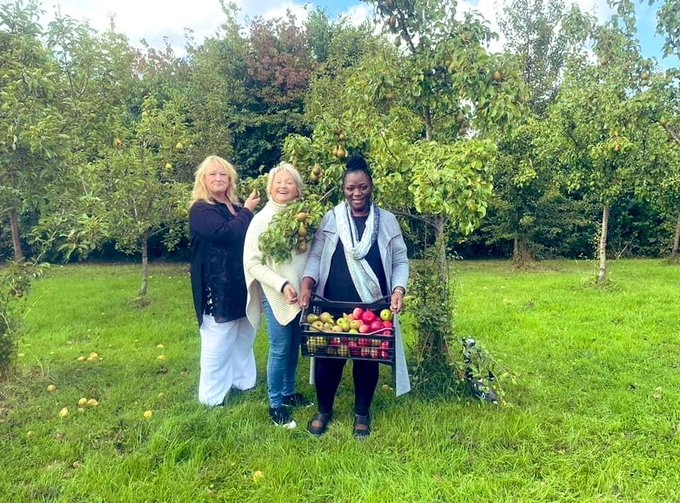
We funded and contributed to a research project looking at existing examples of community- and social movement-led investment models, including place-based models in the UK and overseas. One UK-based example was Barking & Dagenham Giving.
We started to socialise the idea of participatory investment strategies. We wrote about the “democratic deficit” in responsible investing – how it’s not just about where the money goes, but who gets to decide. We also connected with peer networks including the Association of Charitable Foundations and the Charities Responsible Investing Network to share learning with foundation peers. There was a lot of exciting stuff happening, in the UK and overseas, including:
- Community-run funds and assets where local people or grassroots organisations have decision-making power
- Endowments already engaging in innovative uses of grants, investments, and other assets to build long-term community wealth and power
- Intermediaries and field-builders who are nurturing the ecosystem
- Support for communities to build their confidence and capacity to manage funds.
There is a lot of potential to further develop these ideas in the UK.
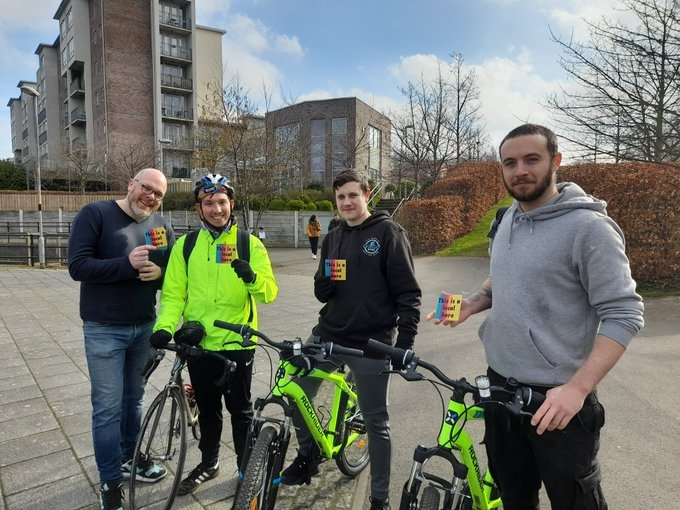
Rana Zincir Celal supported our research in this field.



Related stories
-
Backing the country’s first community-led investment fund
I’d love to see philanthropy let go of the old ways and stop sitting on massive funds.
Cameron Bray, Barking & Dagenham… Read more -
Money needs to flow for all of us to survive
Navigating the foundation space.
Aliyah Hasinah, Black Curatorial Ltd Read more -
Building an economy rooted in care and liberation
We need a movement infrastructure in which funders are the organisers themselves.
Guppi and Noni, Decolonising Economics Read more