
As a foundation with substantial investments and a strong sense of mission, we felt a sense of responsibility and a desire for integrity and alignment between the two.
We had worked on our capital allocations approach, and also developed our role as an active shareholder. In addition, we felt our perspective and analysis within the charitable investment system could be influential.
We undertook two main strands of work.
Around 2021-22 there were discussions in the charity investment world about what trustees were allowed to do with the investments they were stewarding.
Many boards believed or assumed that they were only allowed to invest to maximise financial returns.
Where discussions arose about the conflict between the charity’s goals and its investments, there was uncertainty about taking mission-led decisions which might jeopardize financial returns.
The trustees of the Sainsbury’s charitable trusts were also facing this dilemma. They wanted to invest in a way which was aligned with their mission and goals as a foundation, but their fund managers were telling them this might hamper their returns.
They felt that policy and guidance was not clear. They wanted to get a judgment from the High Court to confirm what they were allowed to do and the scope of trustee duties.
We felt this was a very important point to clarify, not only for the Sainsbury’s trusts and for ourselves, but for the wider system too.
There was potential to empower charitable investors to invest in ways that would serve their mission and not work against it.
Lankelly contributed to the costs of the case and provided and coordinated a number of responses to consultations that were being held by the Charity Commission on this subject.
This case did lead to a helpful High Court judgement which clarified that charity trustees can consider potential conflicts between their investments and their mission when they are making investment decisions.
This also led to revised guidance from the Charity Commission. Information about the judgement can be found here.
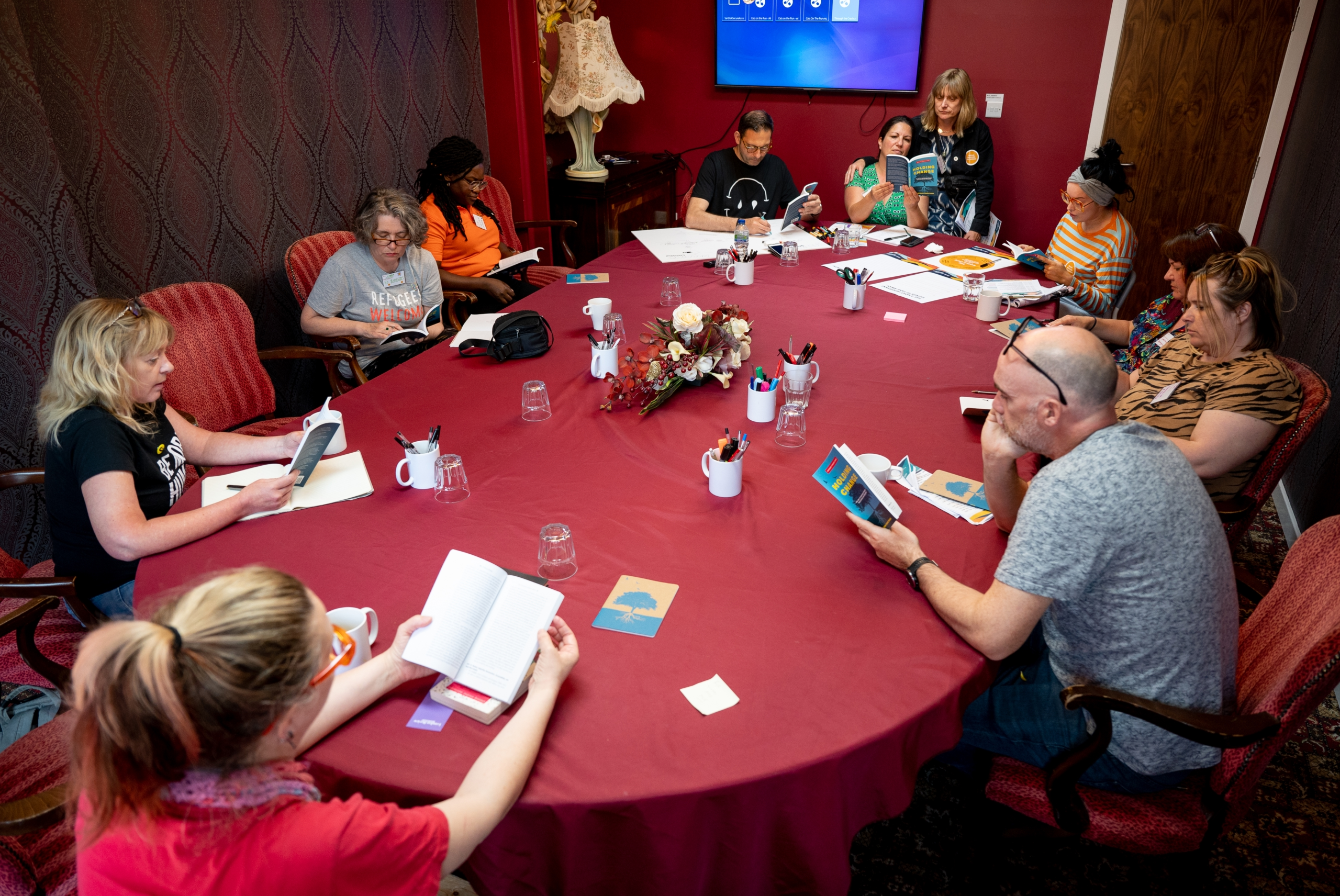
We worked with a number of other foundations who were interested in economic systems change, and helped to promote the exploration of different economic models such as ‘doughnut economics’ and degrowth.
We wanted to explore how to act as foundations who saw the need for economic systems change but were also invested in, and profiting from, the current system.
What would it look like to invest in ways that could help to bring about these new models – or at least be consistent with them?
We convened a learning group with other foundations and put out some provocations and think pieces. We also brought our fund managers into these conversations to gauge their reactions.
If foundations are trying to promote a different economic model and gave a mandate or instruction to fund managers to act in a way that was consistent with that, what would they do?
We felt it was important to bring this kind of provocation into the investment world, as a lot of the discourse and practices within the sustainable and responsible investment spaces ultimately leave the fundamental structures and paradigms in place.
Lankelly’s shift towards the use of its assets in an entirely different way ended this line of inquiry for us, but it is still live and important.
Luke Fletcher was the solicitor at Bates Wells who acted for them.
Resources
-

Barriers to Responsible Investment – collaborative letter
Dominic Burke
2021
- Investments
-

How Should Charities Invest?
Dominic Burke
2021
- Investments
-

Investing Beyond the Growth Paradigm
Dominic Burke
2021
- Investments
-

Transparency can Transform the Impact of our Investments
Dominic Burke
2021
- Investments
Related stories
-
Address fundamental issues like power and wealth
A golden thread to make the scale of change we aspire to.
Chris Dabbs, Unlimited Potential Read more -
Money needs to flow for all of us to survive
Navigating the foundation space.
Aliyah Hasinah, Black Curatorial Ltd Read more -
Philanthropy’s future tied up with wealth inequality
Massive public policy agenda barely off the ground.
Jane Millar, University of Bath Read more