
It describes the formalisation of a whole-programme stewardship function as Lankelly exited the field after the transition pathway redistribution decision.
It is important to say this is a Lankelly-centric account. We cannot speak on behalf of all the people who have been involved, who might see things differently. (There are some stories from collaborators in this process in the journalism section).
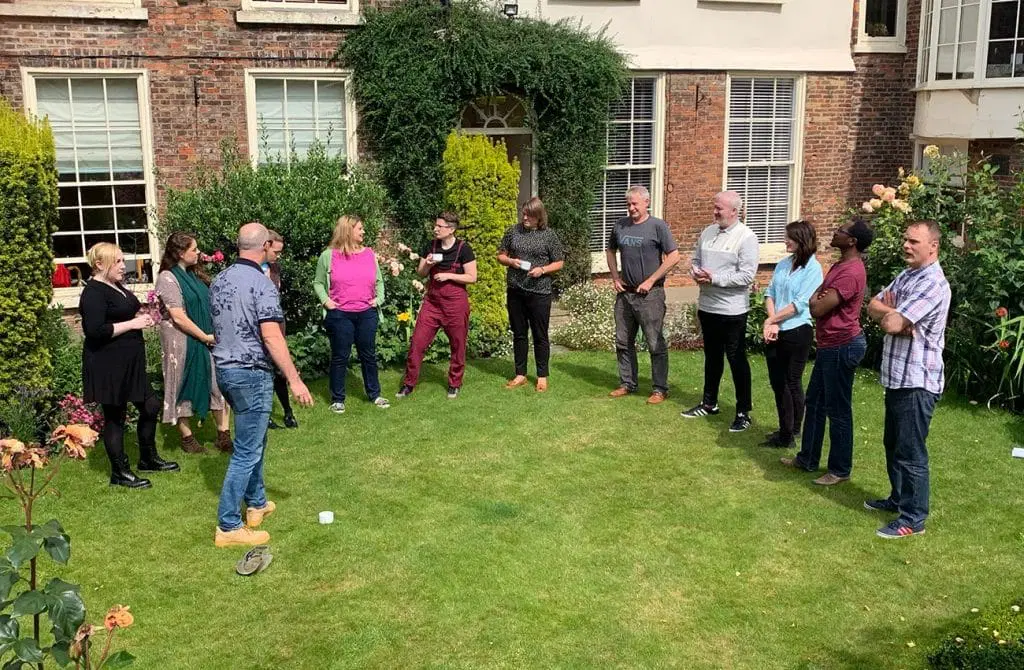
People from across the places had been meeting from the early days of the work, including at big residentials which Lankelly ran.
As our exit approached, the work became about allocation of Lankelly’s final round of funding, and whether and how collaboration should continue.
By 2022, there were some clear similarities:
- A focus on sharing and shifting power
- The importance of relationships and the building of trust
- Attention being paid to capacity building around power-sharing, decision-making and other practices
There were also differences in approach. In some places (e.g. Gateshead and Barking & Dagenham), there was a focus on developing infrastructure for community-level decision making, including developing the practices to support this such as Deep Democracy, participatory grantmaking and Sociocracy.
In others (e.g. GM Systems Changers) there was more of a focus on transferring resources to communities which were overlooked and underfunded by other sources.
We had also introduced practices which were more about ‘inner work’ – anti-racist practice, learning about economics and colonialism, and work on our individual hangups around money.
The core groups in places with more similar approaches tended to have closer relationships with each other. This was important later on.
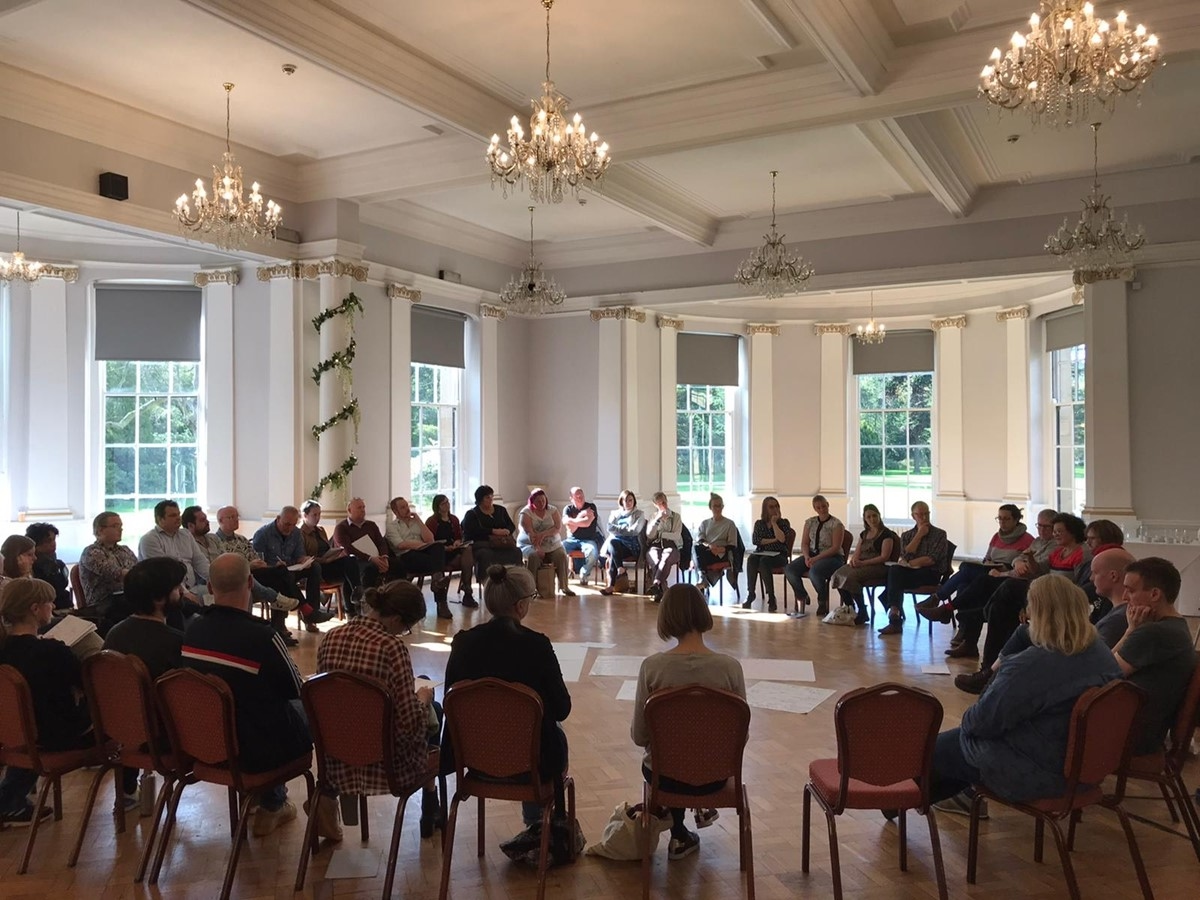
In 2022, we had begun a review of the work. This was intended to be a collaborative process, for all of us involved to come together and consider what had been learned and what this meant for what happened next – including those engaged in parallel place-based work such as LocalMotion.
Though discussions about the inevitability of Lankelly’s eventual dissolution were commonplace inside the organisation, and in the work, the ‘transition pathway’ decision still came as a surprise and created a sense of uncertainty across the place-based work we were resourcing. Initially it wasn’t clear whether (and how much) further funding would be available (the place-based work had been funded year-on-year – something we would definitely change if we were doing this again).
When resources were agreed – £4m over two years, with the second year to be allocated by the people involved – this created a different imperative for coming together. Money was in the room and the dynamic changed as a result. For better or worse, the Lankelly people exercised some power at this point and brought in facilitators to hold the process, at least to begin with.
The process was difficult. Looking back, the time to be in conversation together before making decisions about how the fund should be allocated wasn’t long enough.
There wasn’t enough time for people to (re)build relationships and trust. The geographical spread of the work made this challenging, as did the variations in people’s priorities and the directions of travel in different places.
The unevenness of relationships mentioned above – how some places were more closely aligned than others – became a factor, and there was a lot of stuff going on underneath the surface. It felt like a quagmire. When the moment came to make the decision about funding, it couldn’t happen because trust hadn’t been built.
Throughout this, we endeavoured to anchor ourselves in good process to get us through the difficult phases.
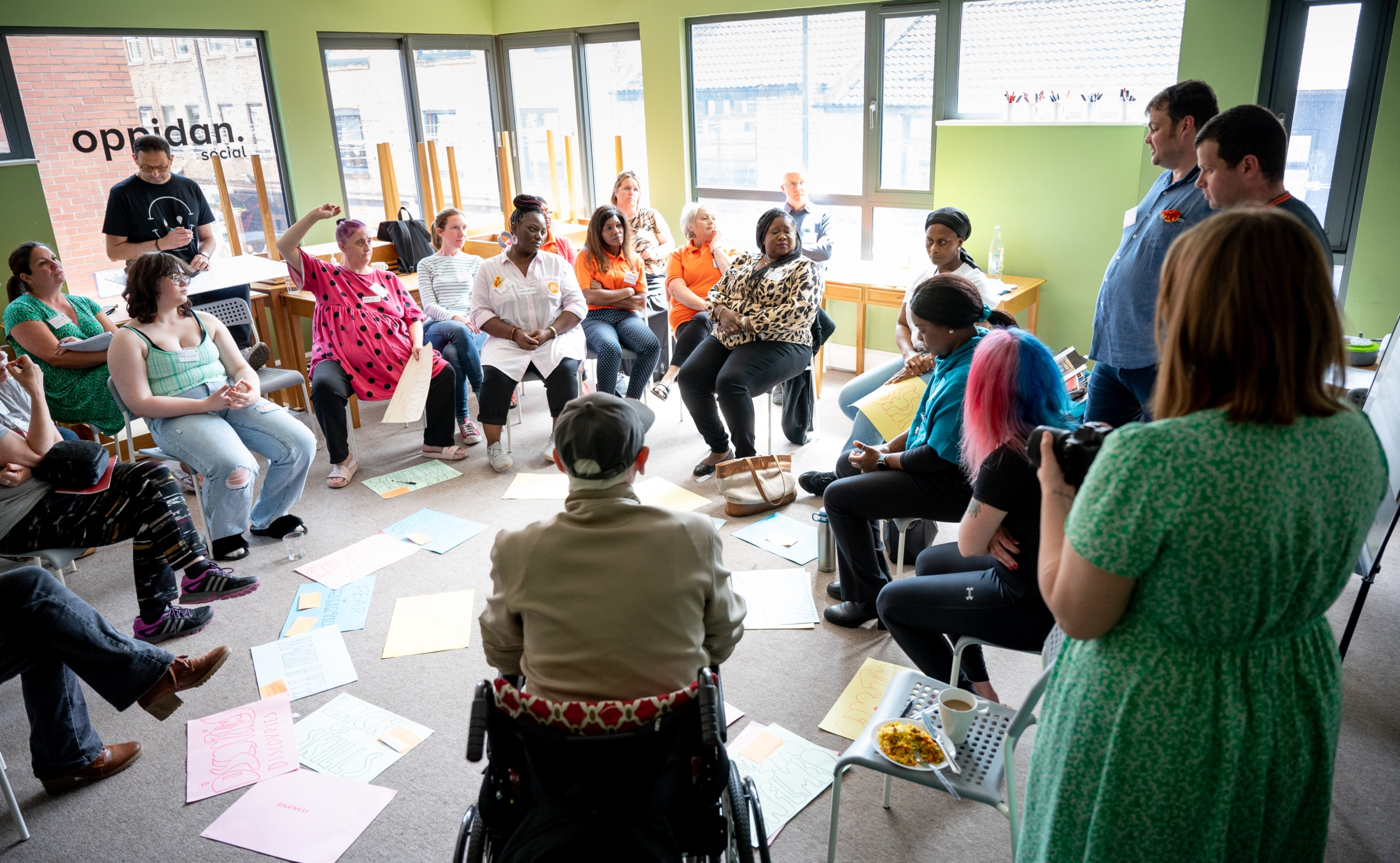
There was a rigorous, consent-based Sociocratic process. This was initiated through a proposal-building stage with external facilitators, who skilfully supported an in-person session with the stewardship group.
The underlying tensions around power and relationships rose again, and with the permission of the group, the process shifted to a smaller representative group which was facilitated by a Lankelly colleague. The consent-based decision making process continued, including speaking to people individually, ‘working out loud’ online, developing a dossier of proposals and counter-proposals, and then two or three in-person decision-making rounds.
This did bring us to a decision and the money issue was concluded. Once that had happened, some of the tension was resolved and space for collaboration opened up. We started to have the conversation we had wanted to have all along.
The story will continue without Lankelly, which is as it should be.
At the time of writing (summer 2025), the cross-place group is working together and having purposeful conversations about resourcing, community assets, movement-building and infrastructure. This doesn’t mean everything has been resolved or that another rupture won’t occur, but they are working things through.
This is the end of the place-based work in terms of Lankelly’s involvement. Some final reflections from the team include:
The work has its own context and dynamics. It is unique. In other ways, it is the same as any other work about the co-stewardship of resources, collaborative decision-making and shifting power. The things that came up will come up.
Therefore, the key things always to pay attention to are relationships and power dynamics. This is both individual and group work. It also requires infrastructure which supports distributed power, leadership and capacity building. This all takes time.
Good work can happen within groups like the one described here. It is the case, though, that the power systems around these kind of processes have to change in response to what is learned.
If the big money decisions are still being made by distant boards of trustees meting out relatively small amounts of funding, the systems change we want to see will not happen. We will only be creating little bubbles of experimentation. The big money needs to shift.
Without this shift, anyone from a funder initiating processes like the ones we started needs to be abundantly clear about the permissions they have (and don’t have) to release money and loosen processes. You’ve got to be explicit about where your power begins and ends.
In retrospect, we wish we had got to questions about land ownership, economic systems and food systems. This might have happened if we had been more rigorous about bringing all our learning – including from our investments and movements work – together into one place.
In general, we regret our overall squeamishness about the power we held. We could have been much clearer about our intentions. We could have accepted our power as a temporary necessity. People could then have joined in – or not – based on an informed choice. This may have led to less angst and anxiety as people tried to work out what we, the funder, wanted.
Resources
-
Devolved Decision Making: Sharing Power and Resources in Place-based Change Work
Max French et al
2024
- Devolving decision making,
- Philanthropy,
- Place-based work
-

Dissolving Separations
Julian Corner
2024
- Endings,
- Philanthropy,
- Redistribution
-
Cities in Action: Democratising Local Governance
Research for Action
2024
- Governance,
- Power,
- Public services
Related stories
-
Learning was a driver of effective, systems-focused collaboration at Lankelly Chase
How a culture of emergence, transparency and coaching transformed my journey.
Kathleen Kelly, LocalMotion
Read more -
Philanthropists face existential challenge
Fundamental rewiring needed.
Andy Crosbie, CIA CIC Read more -
Devolved decision making revolutionary in Manchester
What is it like for a local team to hold money and make decisions on their own behalf?
Paul Connery, GM Systems Changers Read more