
For a number of years, Lankelly Chase was most associated with ‘severe and multiple disadvantage’.
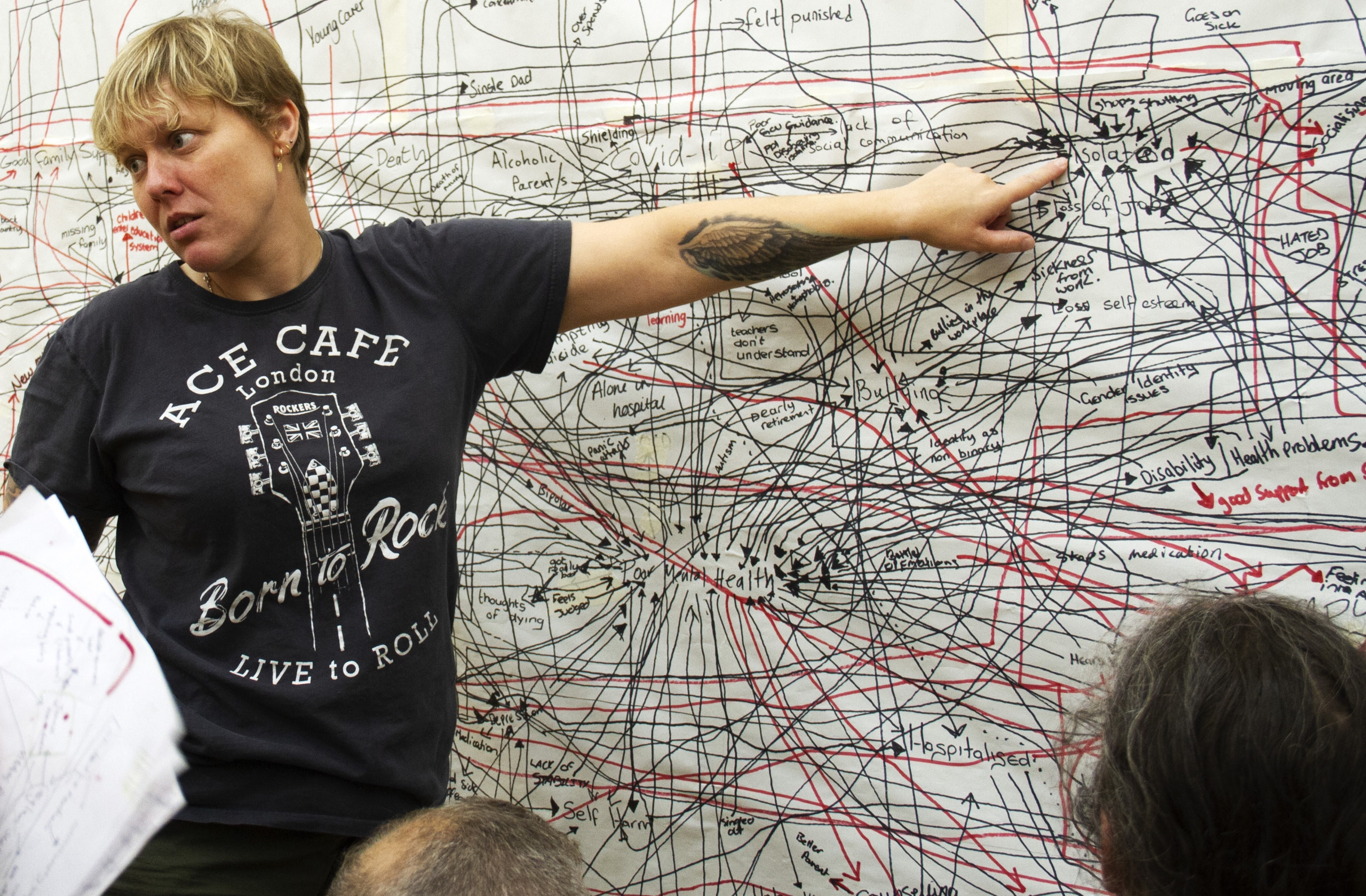
We coined this term to bring attention to the interlocking and mutually reinforcing nature of social harms (or ‘needs’) like homelessness, substance misuse, mental ill-health and involvement with the criminal justice system, arguing that these issues were being unhelpfully separated into different silos of service provision, funding, and government policy.
Having identified this as our core focus, we wanted to use our resources to make a difference and add value to the field. We commissioned and funded research – particularly the Hard Edges series – to illuminate the scale and nature of the problem; supported grantees who were modelling relational and ‘whole person’ support; and invested in campaigning and influencing work.
The ‘multiple needs’ conception of social harm was also the starting point for our place-based work. We convened and funded organisations, groups and networks to pursue systemic change in their own communities, and supported people with lived experience of disadvantage to take on local leadership roles.
The problems we were focused on in this phase of our work still exist, the analysis of multiplicity remains powerful, and many of the initiatives which received early support from Lankelly Chase – including MEAM, Agenda, and Expert Link – endured.
However, over time, we became uneasy about the boundaries beginning to form around a particular ‘problem cohort’ who were still being defined by ‘their’ needs/deficits, and knew that people were still missing from the dialogue we’d helped to create. We sought a less individual, more structural understanding of inequality and as our awareness of systemic oppressions grew, our work (and what we were funding) began to shift in line with this.
Our CEO Julian Corner gives an overview of ‘SMD’ and what it meant in our work