This aimed to give them the space, time, permission and tools to create change.
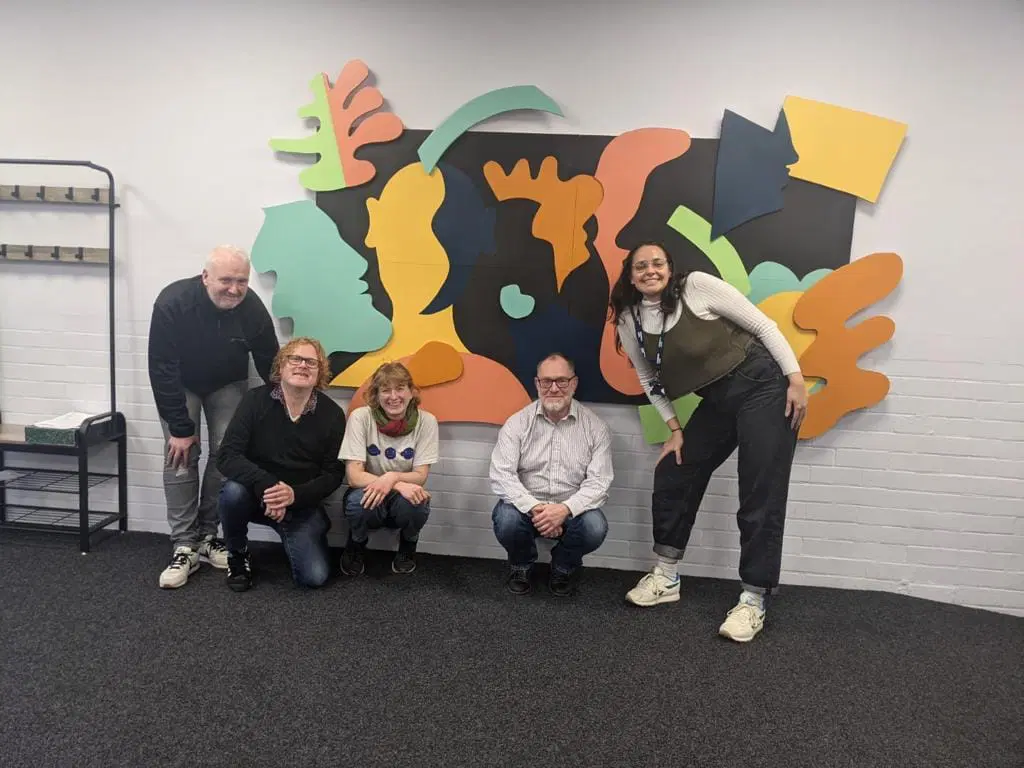
The programme was developed by a collaborative of women systemic practitioners called The Point People.
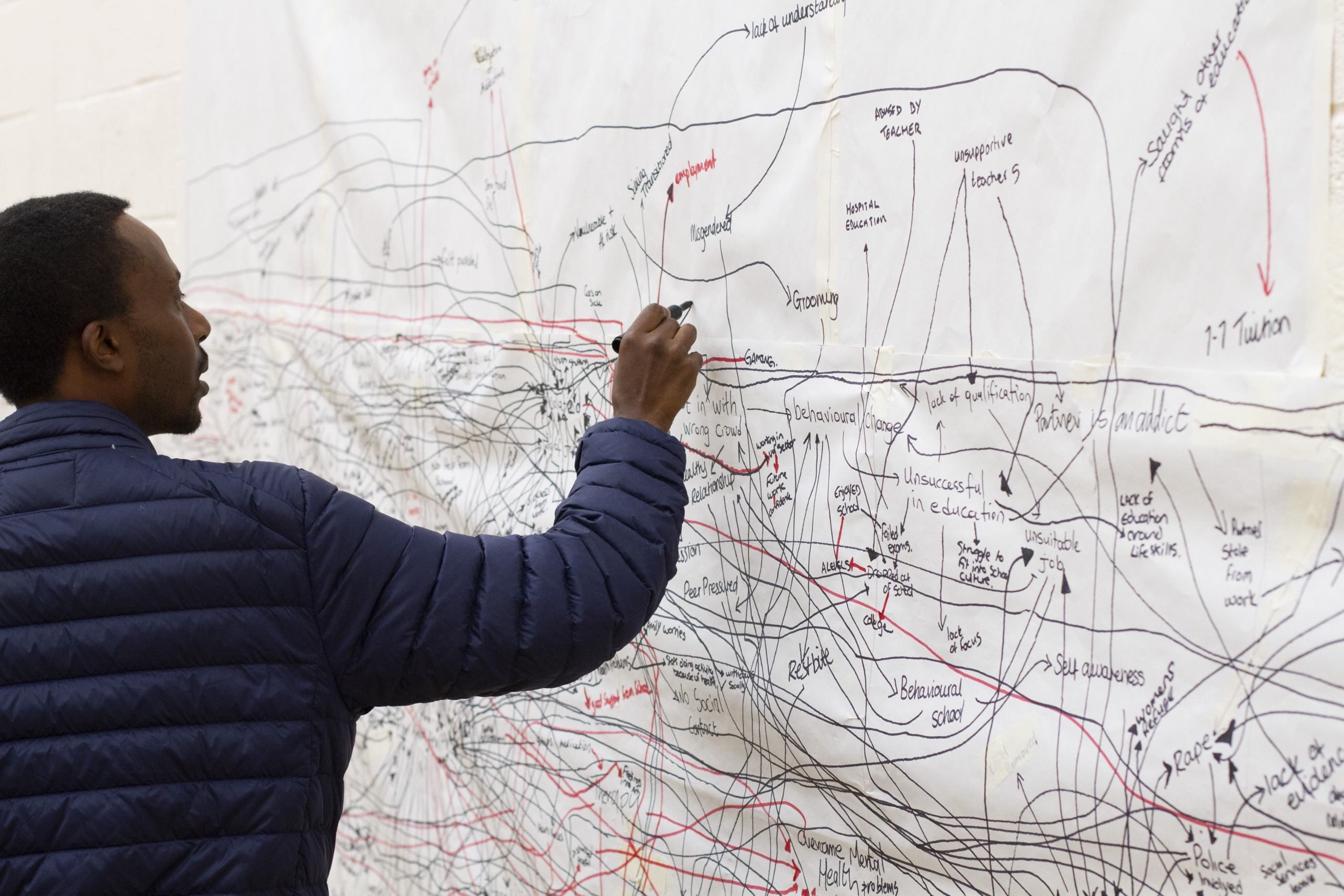
Our view was that people on the front line of support work would have powerful insights into what was and wasn’t working in service delivery, and how different elements of local systems were interacting.
We wanted to unlock the wisdom and experiences of people working directly in services supporting marginalised people and communities, and empower them to pursue their own ideas and experiments to make positive change.
We also wanted to build networks and collaborations between people who’d developed skills and learning around systems change, and whose different perspectives and viewpoints could add up to a more complete picture of the whole – so whilst we started off with quite broad groups of professionals who didn’t necessarily know each other, we went on to run the programme with people involved in our ‘place’ work (including in Scotland, in partnership with Corra Foundation), and within the same organisation (the Children’s Society).
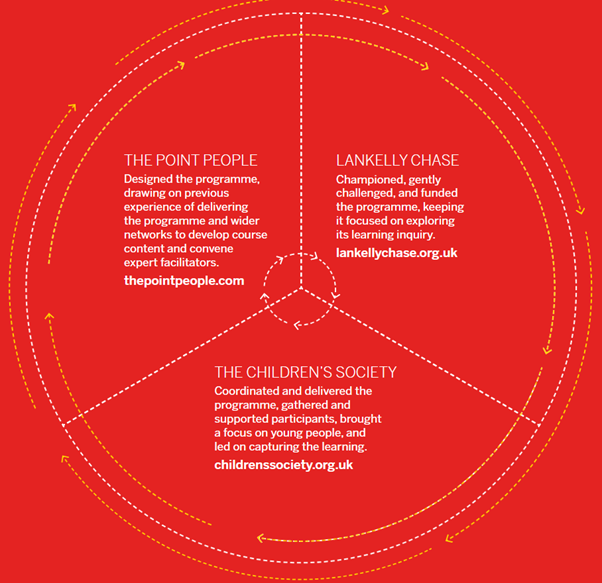
We invested heavily in people’s attendance and commitment to the course, including securing managerial support and providing funding to back-fill people’s time.
This made the courses feel more immersive and involved than the average training course, especially over a period of several months.
The course supported a number of experiments and prototypes which participants were able to build into their work and attempt to scale in their local organisations and systems. As well as these practical outputs and the building of knowledge and skills with participants, the course also unlocked people’s sense of confidence and agency, helping them to see themselves as leaders and changemakers.
The course enabled people to build bridges and relationships, both with other participants and in their wider working life; some meaningful links were formed between Systems Changers alumni which continue to grow and bear fruit
Our CEO Julian Corner talks about the programme and what the foundation was hoping to achieve. [NOTE – placeholder video]
There was sometimes a ‘back to reality’ dynamic outside the environment and timeline of the course: one of the biggest challenges for participants was continuing to find the time and permission to work in systemic ways once the official programme ended.
We adapted the course for different groups and audiences, but this also meant losing touch with what were the ‘core modules’ and which sessions were specifically put together for a given group.
Relatedly, the course was certainly resource- and capacity-intensive, and we did wonder whether the ‘bespoke’ option we helped to put together ourselves was really adding value to some of the other training available elsewhere in the sector.
Rather than solidifying as a proprietary training course in the field of systems change, the intentions and elements of the programme became more dispersed across our work.
We took the insights about building systems thinking ‘muscle’ and collaborations particularly into our place work, and supported local partnerships to act systemically in pursuit of social justice.